
Articles
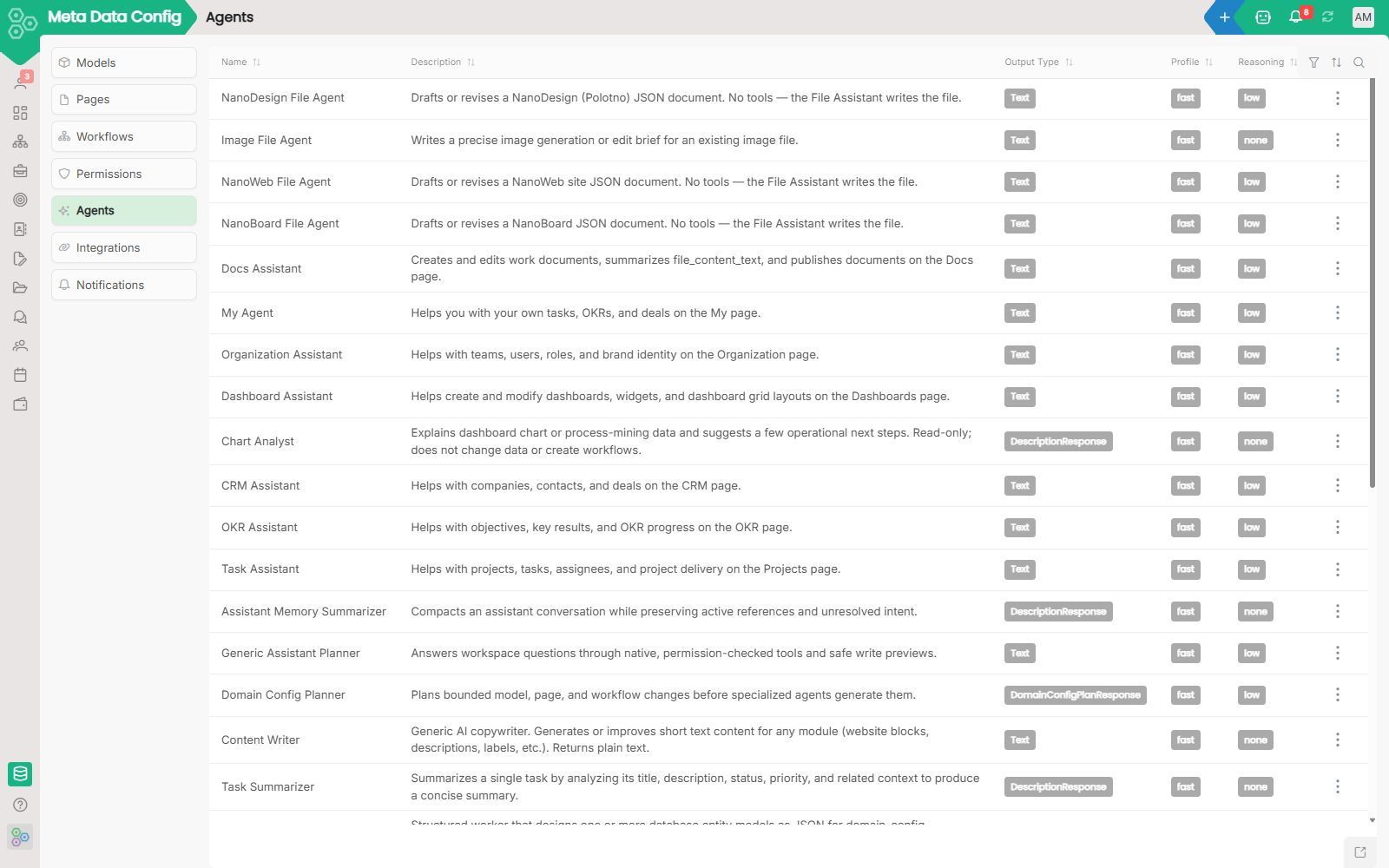
AI Agents: automate tasks with prompts, not code
Every workspace accumulates work that follows a pattern: read this record, summarise it, draft a reply, classify the input, generate a document. Doing it manually every time is waste.
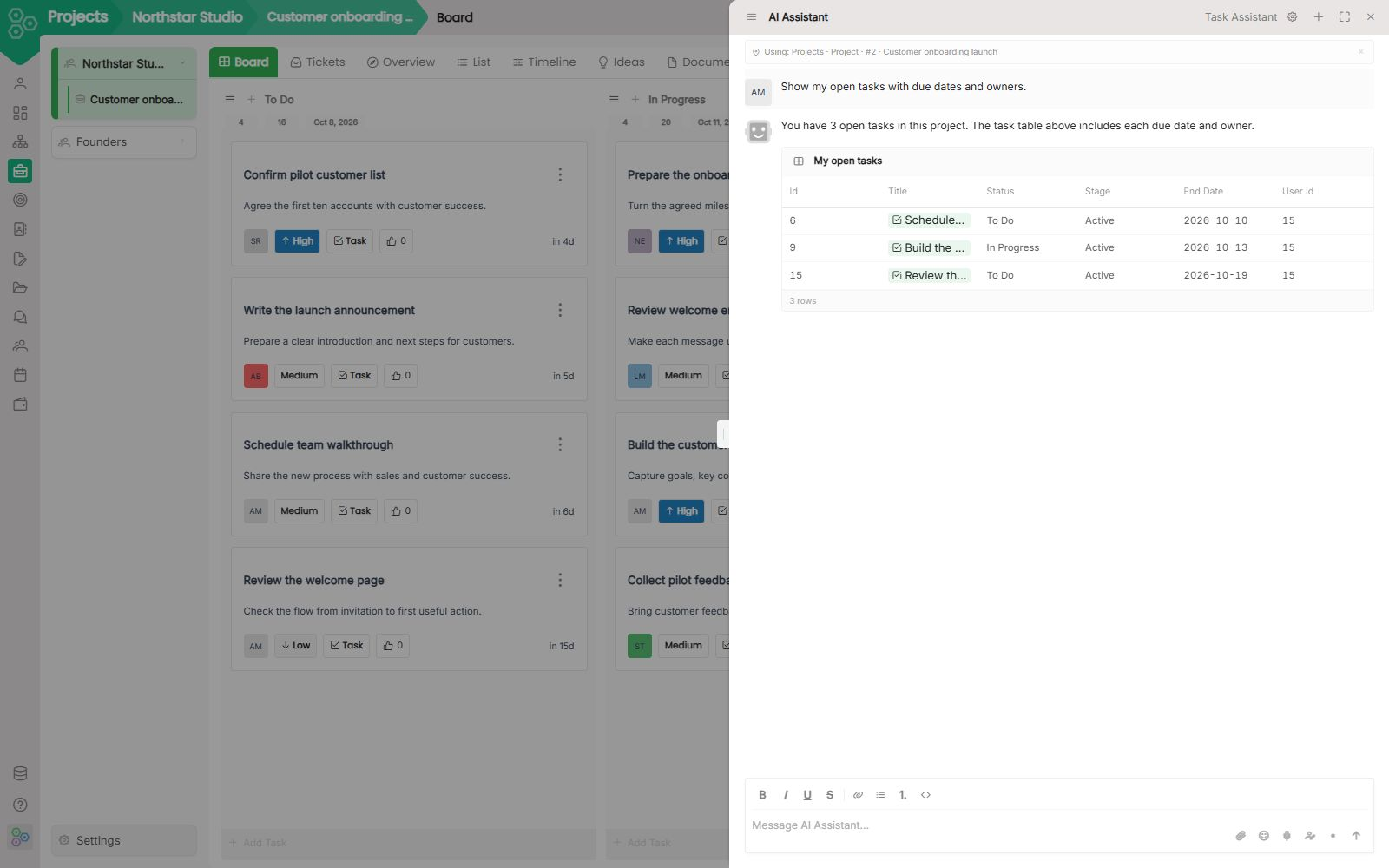
AI Assistant: ask about the page you are on
Sparkles or Ctrl/Cmd+J opens a chat that already knows the screen in front of you. Ask about your tasks, deals, or key results without leaving the page.
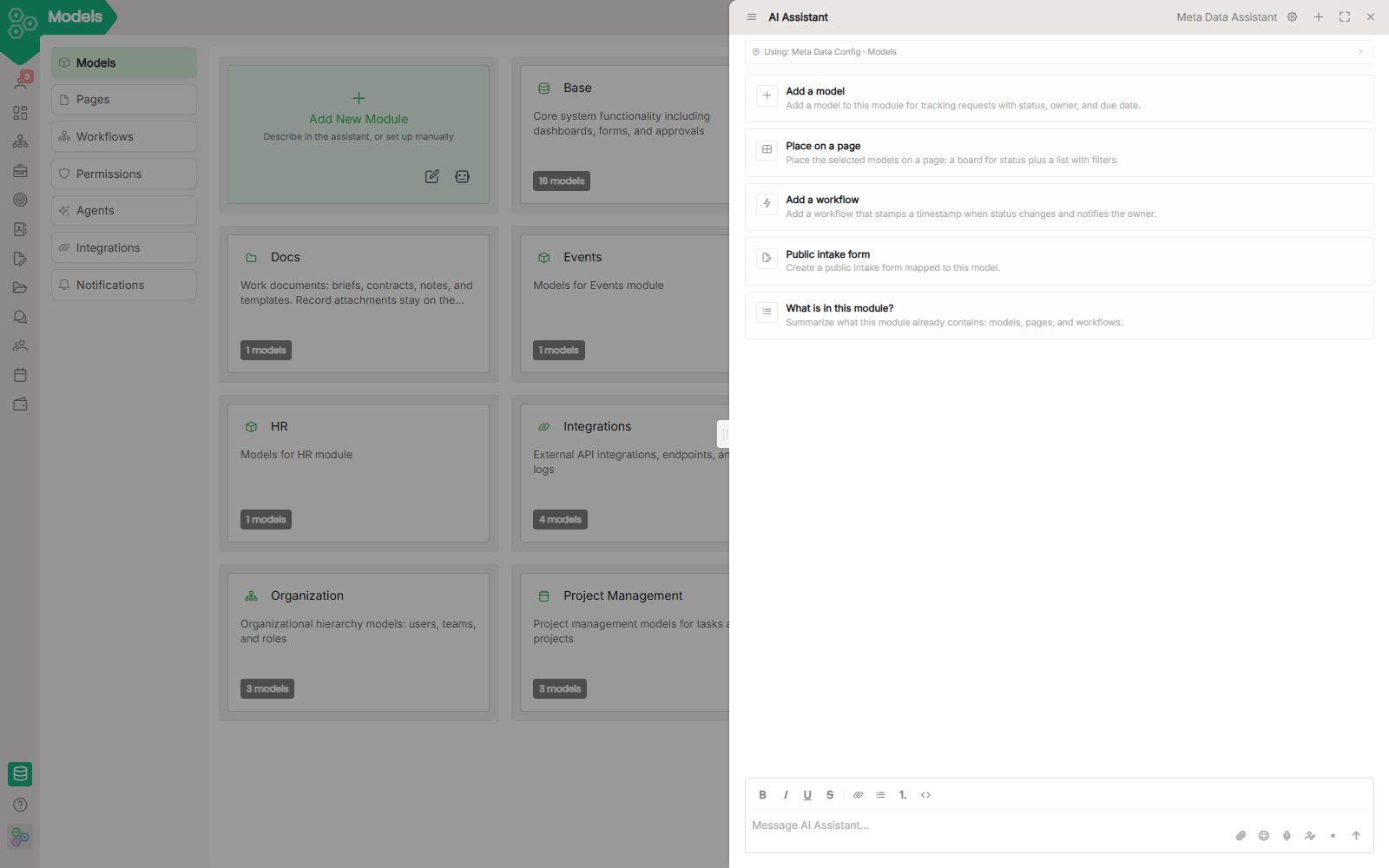
Module Builder: Create exactly the modules your business needs
Every module you create in Worknano is deeply connected to everything else, workflows, permissions, files, reporting, AI Agents, and process mining.
Worknano API: Clean, Consistent, and Extremely Flexible
Worknano is more than an all-in-one workspace. It is a complete operating system for ambitious startups, studios, and growing teams.
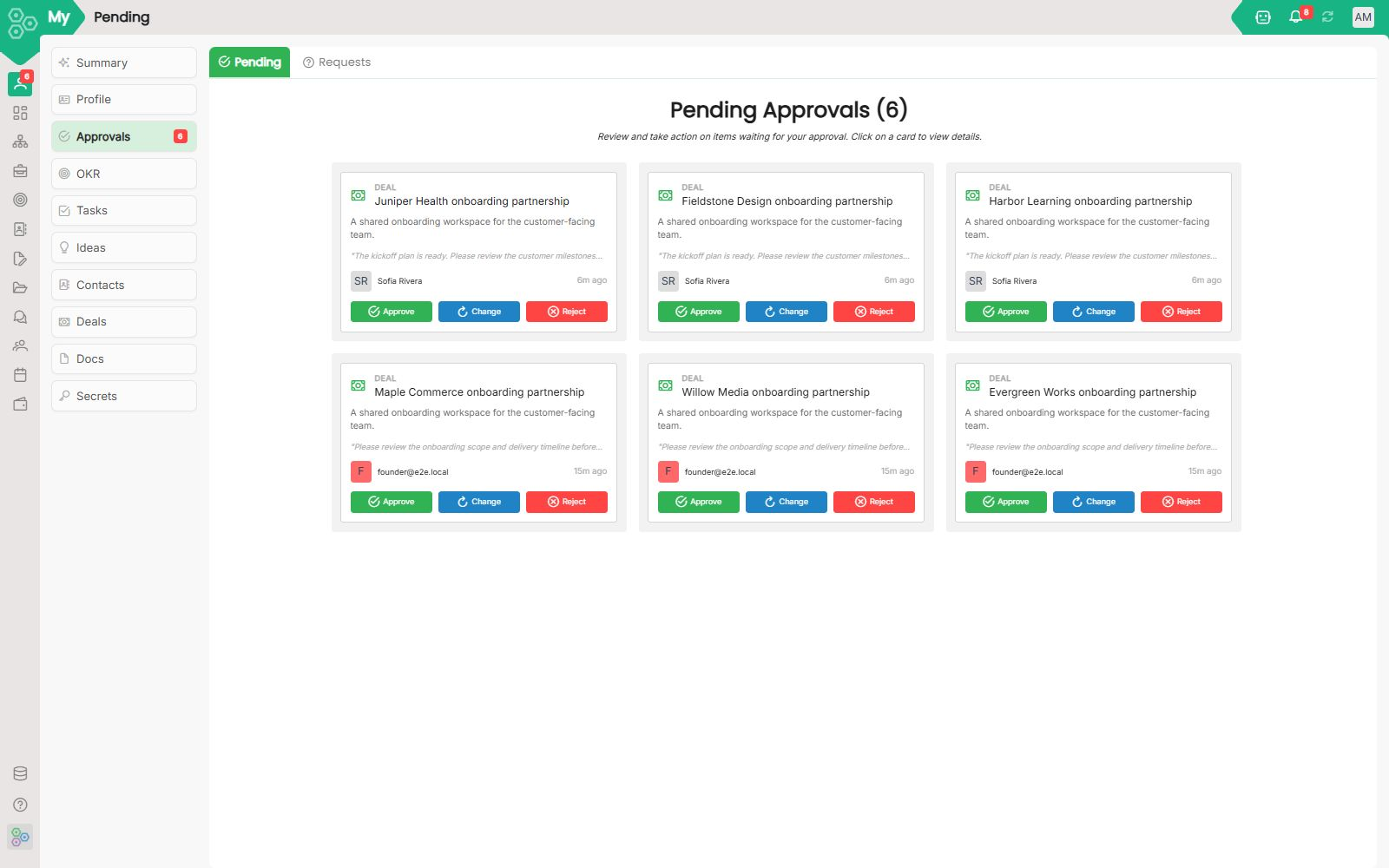
Stop chasing people for signatures. Build automated approval workflows that just work.
The Approvals module turns the frustrating "let me get back to you" delay into a smooth, tracked workflow. Instead of sending Slack messages or endless follow-up emails, your team can submit requests and get formal sign-offs automatically.
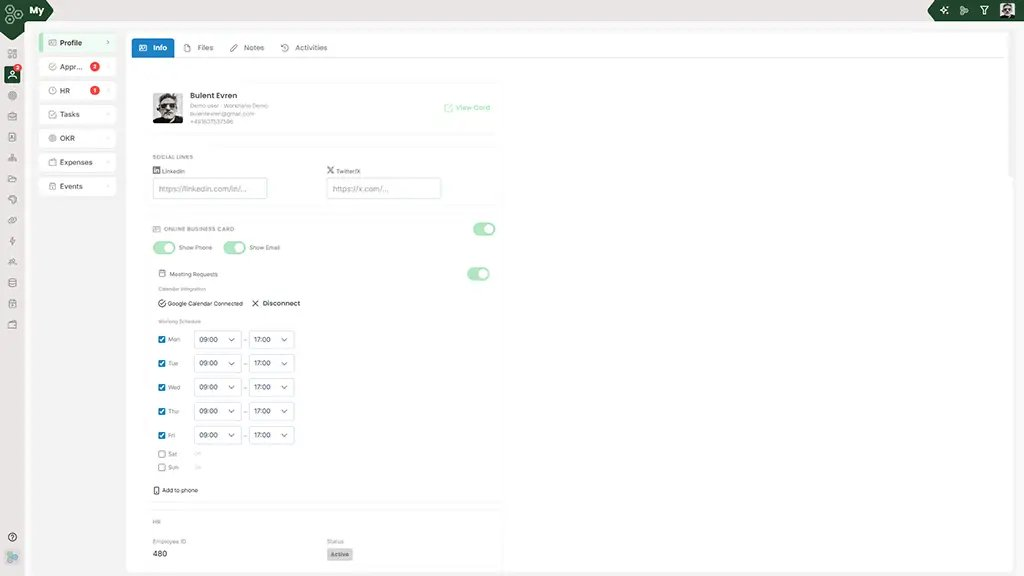
Meeting booking built into your team profiles, not tacked on
Most scheduling tools require you to manage messy external links that sit outside of your main business profile. Worknano Booking integrates your calendar right into your public-facing team presence.
Boutique Hotel Chain: From Manual Chaos to Instant Bookings
"We scoped a 6-month, €45k custom build, but it was just too much.
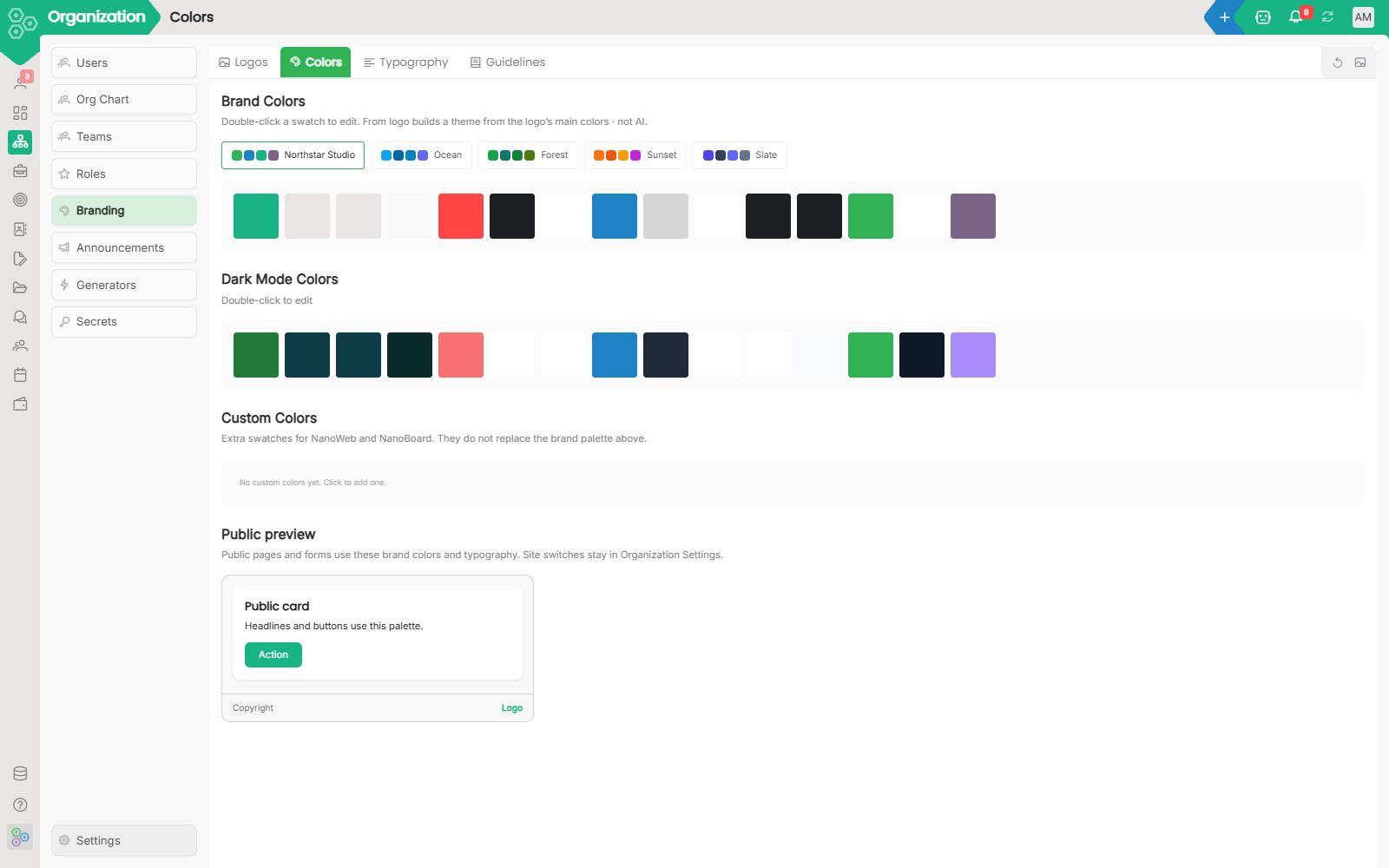
Your brand, in one place not scattered across ten tools.
Process Mining: See how work actually flows through your workspace Every team has a written process and a real process. The written one lives in a slide deck.
Building your 21st module with AI: a working playbook
Every business has at least one module that no off-the-shelf SaaS quite covers. A bespoke compliance tracker for a regulated industry. A donor-care system for a non-profit. Worknano's data-model designer plus AI assistance closes the gap from weeks to an afternoon.
Can I migrate existing data?
Yes. CSV and Excel imports are supported out of the box and map directly into CRM, Projects, and HR with auto-suggested field mapping.
Can we self-host or get a dedicated instance?
Single-tenant on-prem deployments and dedicated private infrastructure are available on the Enterprise plan. The standard SaaS uses per-subdomain tenant isolation so your data never touches another customer's environment.
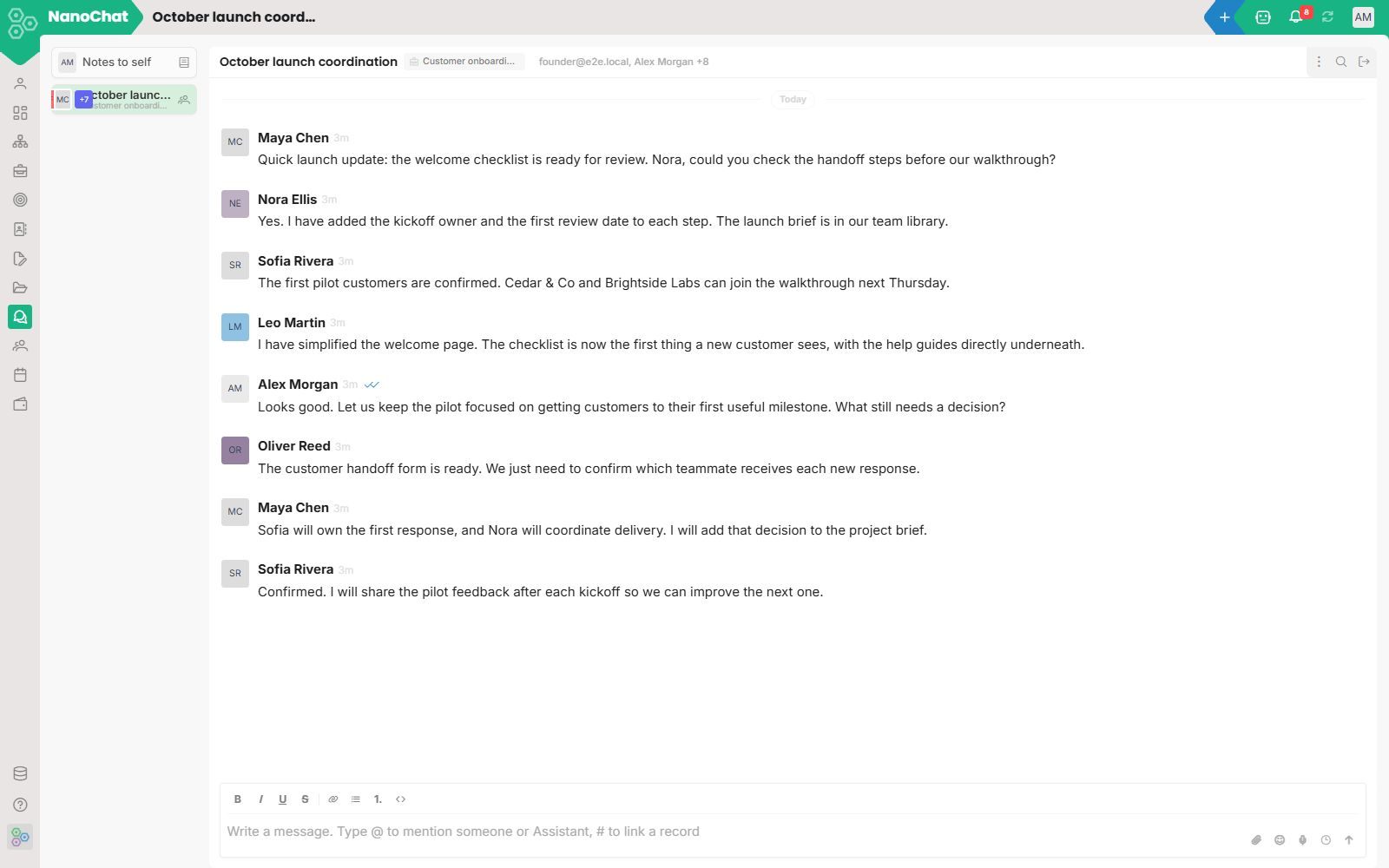
Chat: a topic on the work, not another inbox
Topics stay on the record. People and the Worknano Assistant reply in the same thread, without a separate Slack workspace.
Contact Sales: skip the form, talk to a human
Most sales pages send you to a form, then to an SDR, then to an AE, then to a follow-up, then to a quote. We are a small team and we cut that chain.
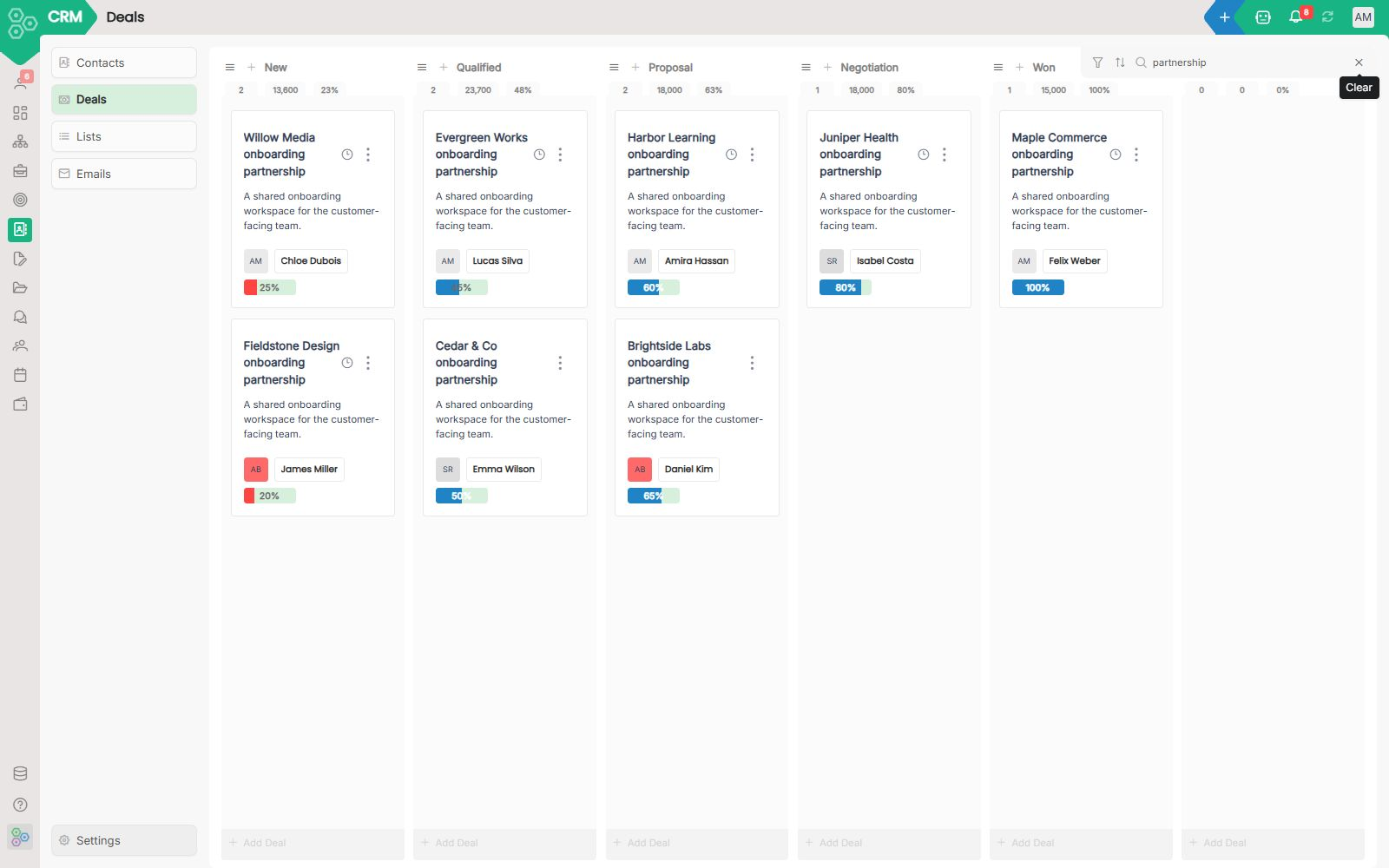
CRM that lives inside your workspace, not on the side of it
Most CRMs treat your sales pipeline like an isolated island. The deal lives there, but proposals are in another tool, invoices in finance, onboarding tasks somewhere else, and customer data gets copied across five different places.
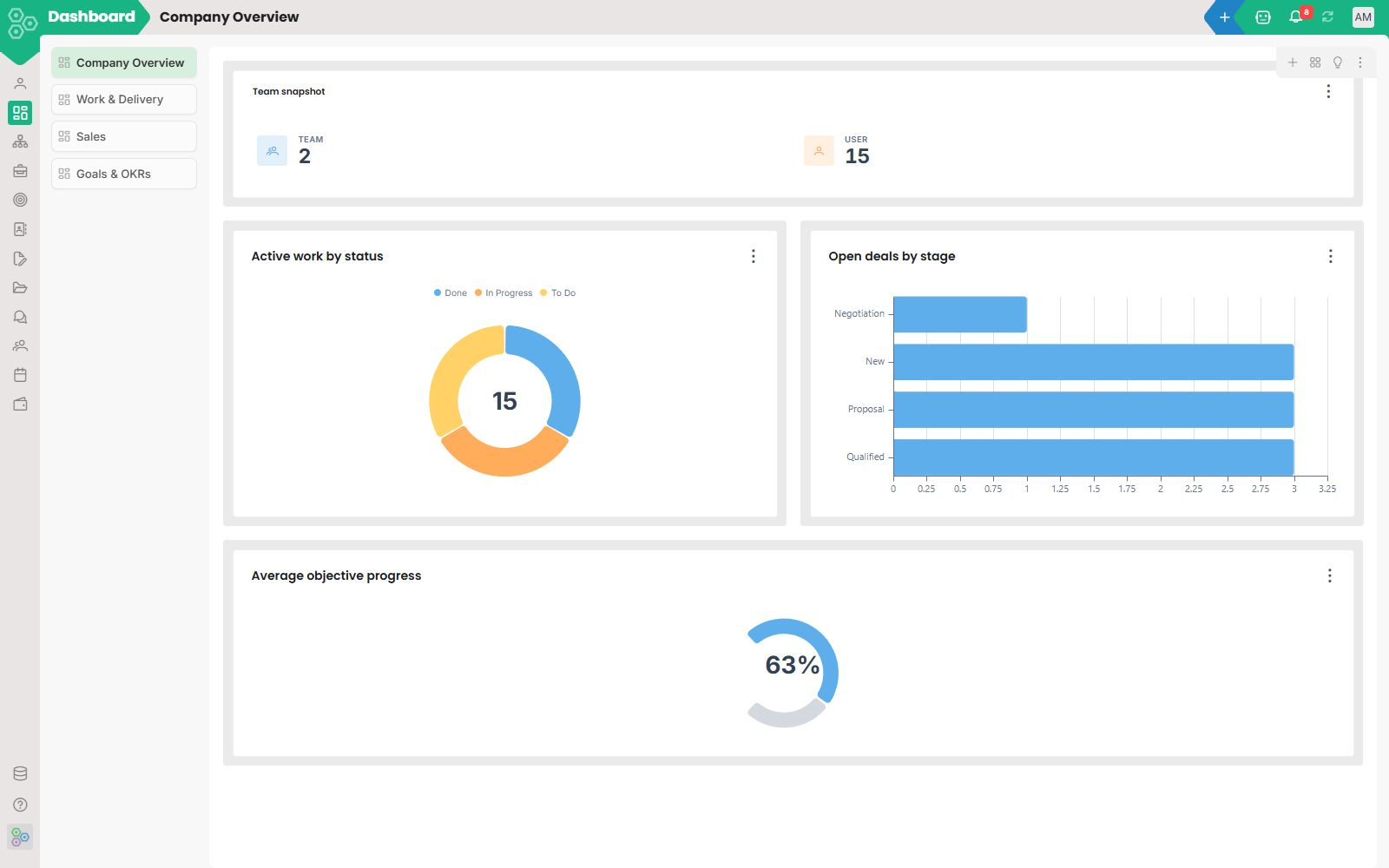
Dashboards that are wired to the actual work
Most dashboards live in a separate tool, refresh on a schedule, and tell you what already happened. Worknano Dashboards are inside the workspace, built from the same data your team works in, so the number you see and the record behind it are one click apart.
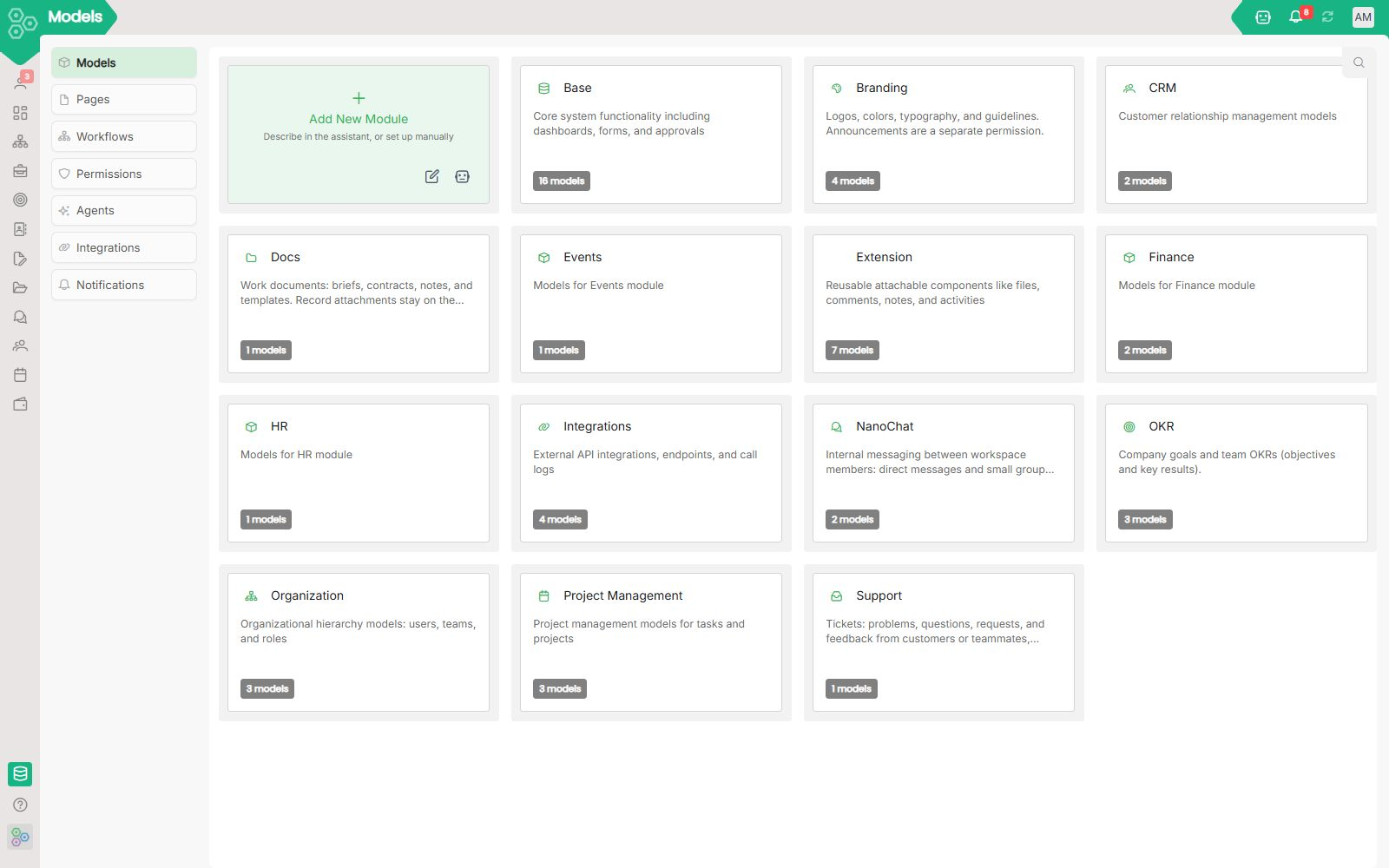
Your data model, visible and editable, no migrations required
Your data should fit your business. Not the other way around. Most SaaS tools give you the columns their engineers decided you need.
How to edit a page assistant and a reusable agent
This lives under Config → Agents. Sparkles opens the page assistant. A reusable agent is prompt, tools, output. You run it from a record, in bulk, or as a workflow step. There is no foreign key to agent. Turn the editor off and shipped agents still run.
How to use the page assistant (sparkles / Ctrl+J)
Sparkles or Ctrl/Cmd+J opens the assistant for the page you are on. Starter cards, the composer, History, and +. Walk me can skip to this drawer. It is not the Agents editor.
How to post an announcement
This lives under Organization. Founders and Directors usually see it. Header + writes a dialog, a Summary notice, or an email / notification. Set audience, theme, and dates. Dialogs can show once or on every login.
How to approve or reject a request
This lives under My. You do not create an approval by hand. Open Approvals, stay on Pending, decide, leave a comment if the form asks. Requests is what you submitted. A secret ask is a common example.
Brand kit: logos, colors, and fonts in the workspace
This lives under Organization. Logos, colors, typography, guidelines, and the email frame. Double-click a swatch, Reset, or From logo. Colors, fonts, and logos stay headings here. They do not get their own URLs.
How to use Chat: messages, replies, reactions, and your switches
Green + starts a direct chat or a small group. @ mentions, # links a record, attach a file. Hover to react, reply, or forward. Settings: left or right, side panel or inline, voice language, and the two chat notices.
Workspace admin: models, pages, and workflows
Config sits at the bottom of the sidebar for people who set up the workspace. Pages and Notifications stay on this screen. Other editors have their own docs. A missing tab means that editor is off. Shipped automations still run.
How to use the sales CRM: company, contact, and deal
Open a company, add a contact, create a deal, drag it to the next stage. Save a list you always look at. Send an email template. That writes the send log. You do not type history by hand.
How to create a KPI dashboard and add a widget
Create a dashboard, set who can open it, add a widget, pick what to count and how to group. Preview on the right. Move and resize, then save. Click a chart slice when it is set up to open that list.
How to call the Worknano API
This lives under Docs, not as a Config tab. One HTTP shape for every module. GET /api/v1/object/{model}/{id} reads one. GET /api/v1/objects/{model} lists. POST, PATCH, and DELETE write. Workflows call this. Store keys in Secrets.
How to share a file and set folder access
Open a folder, add a file or upload, set who can see the folder. Double-click in list to preview. Double-click in icons to edit. Publish one file for a public link. Templates stay internal.
How to create a form: style, logic, assessment, and submissions
New Form or header +. Describe it to the assistant or build it yourself. Set style, labels, logic, scoring, who can see it, captcha, languages, CRM connect. Visitors submit. You read the inbox.
Email signature generator and link templates
This lives under Organization. Templates for QR codes, tracked links, signatures, and files from the person and the brand kit. Header + adds one. The replay icon restores the built-in generators.
How to add an integration endpoint and read the API log
This lives under Config → Integrations. Set path and method on the endpoint. Mapping lives on the workflow step. Inbound webhooks push in. The API log is read-only when a step fails. Keys go in Secrets.
How to edit a model and its fields
This lives under Config → Models. Click a module card, open a record type, prefer an existing field. Connectable plus Connect on the record binds a live count. Connected Fields only lists those binds.
How to add a page with the assistant or by hand
This lives under Config → Pages. Add New Page, sparkles on that card, or header + opens the assistant so you describe the screen. The pen sets name, label, icon, layout, and sections by hand. A yellow DRAFT badge stays until you save all changes.
How to use My: your work, approvals, and profile
Open My from the left sidebar. Jump from Summary into a record, ask My Agent, approve something, add a task on your board, and request a company secret.
How to read the bell and edit notification templates
Click the header bell. A row opens its path and marks read. You cannot invent rows. Admins edit templates under Config → Notifications: {field}, {fk.field}, to_paths, email or chat. A workflow NOTIFY writes them.
How to update an OKR: period, objective, and key result
Change year and quarter, add an objective, nest a key result, type the current value. Progress is a number. You do not drag this on a board. Filter by owner. Your RACI rows also sit under My.
Org chart: who reports to whom
This lives under Organization. Click Org chart in the left sidebar. Click a person or a team to open details. It is a picture of Users and Teams, not a slide you export once and forget.
Organization: directory, org chart, and brand studio
Organization is the company directory and brand studio. The left sidebar switches sections. There is no top tab bar. Invite people, set teams, then open Secrets, the org chart, generators, announcements, or the brand kit.
How to set who can read, create, or approve a record
This lives under Config → Permissions. Open a record type and set which roles can read, create, update, delete, or approve. Access levels sit on the person and can unlock a module. You assign the role on the user in Organization.
How to set your profile, public card, and meeting hours
This lives under My → Profile. Hover the avatar, open View Card, toggle phone and email, set calendar hours, then Add to phone. That is your identity, not Organization → Users.
How to run a kanban board: tasks, ideas, and tickets
Pick a project, add a task at the bottom of a column, drag it when status changes, open the card to set a date. Use List for Backlog, Timeline for dates, Ideas then a task, project chat.
How to add a shared secret and request access
Open Organization → Secrets. Header + adds a company login. Mark it Requestable so someone can ask from My → Secrets. You approve on My → Approvals. Personal logins stay on My → Secrets.
How to run the ticket inbox on a project
This lives under Projects → Tickets. If Support is off, the tab hides. Quick-add a title, set type, priority, channel, and requester. Escalate to a task or an idea. Resolve when done. Do not reuse a task for intake.
How to add a workflow: manual, scheduled, or auto
This lives under Config → Workflows. Daily work is the ⋮ menu on a record. Admins add Manual, Scheduled, or Auto here. Connected Fields is a fourth tab, not a class. A step can set, notify, call, approve, or run an agent.
Worknano docs: how to use the workspace
How-to pages for My, Projects, CRM, OKRs, Organization, Config, and the API. Each page says what to click and what happens next.
DTC Fashion Brand: Reducing Fulfillment Errors by 70%
"Our mix of Shopify, Airtable, and WhatsApp was constant chaos, leading to a 12% error rate.
E-commerce Ops: Syncing Marketing and Logistics
"Our Shopify store, email marketing, and logistics tools never talked to each other. Nobody had a unified view of the customer.", Sofia Rossi, Head of Ops, Verde & Co (Milan, €4.2M revenue) The Problem: Slow handoffs between the marketing and logistics teams were creating a poor experience for their customers.
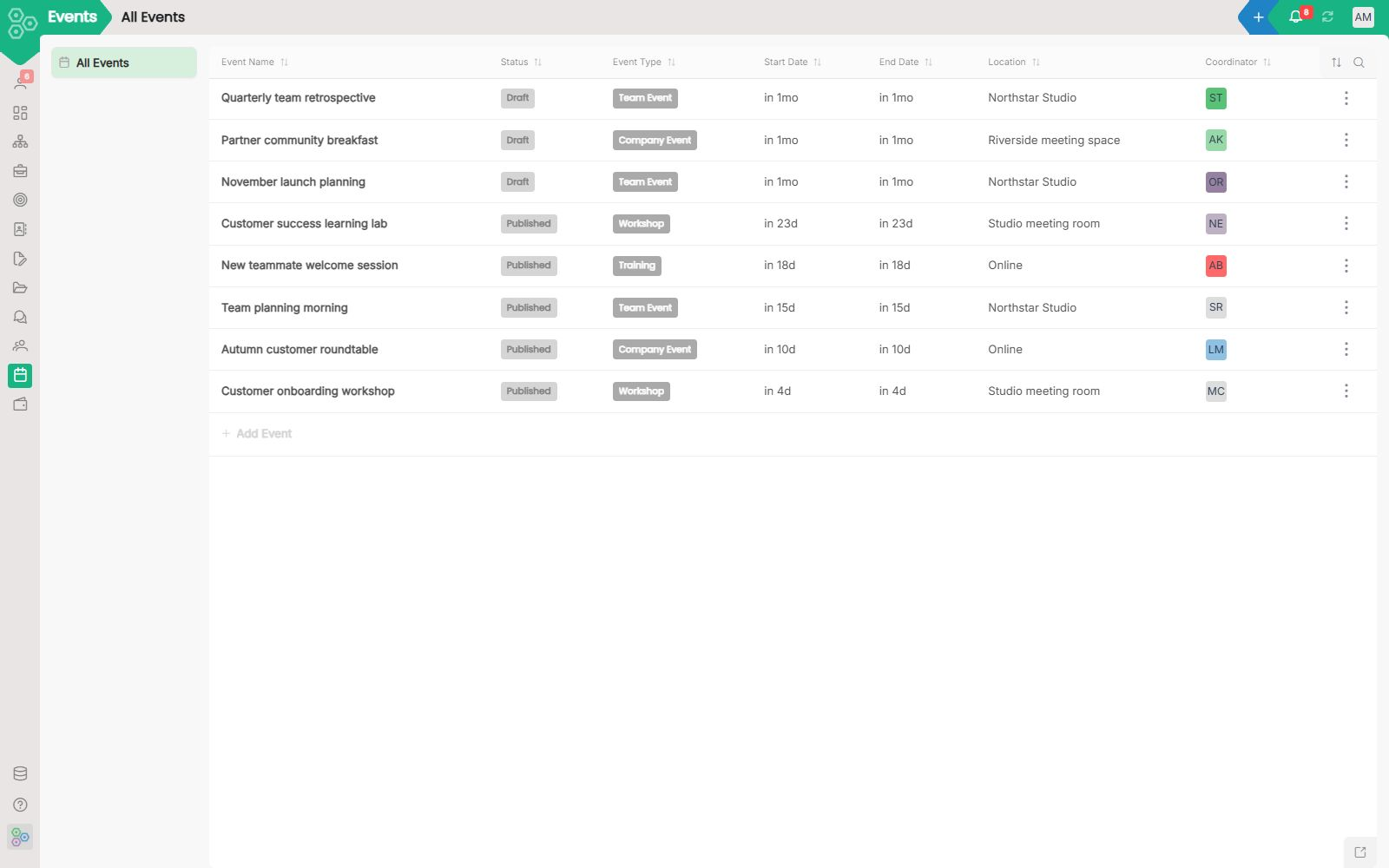
Events and stuff scheduler from registration to follow-up, in one workspace
Running an event today usually means a registration tool, an email tool, a check-in app, a survey tool, a payment processor and a spreadsheet to glue them together. Worknano Events ships every step in one workspace, so the attendee record is the same record from registration to follow-up email three weeks later.
What if I need a module Worknano doesn't ship?
Describe it in plain English. The AI Module Builder generates the data model, input form, workflow, and report inside the same auth and database.
Which AI model does the AI Module Builder use?
Flexible LLM configuration. You can connect any model you choose, including local deployments, open-source models, or your company's own private endpoint. You're never locked into a single provider.
What happens to our data if we cancel?
Your data belongs entirely to you. Every list view exports to Excel, CSV, or PDF.
Where is our data stored, and is it secure?
EU (Frankfurt) by default; US East and APAC are available on request. All data is encrypted at rest (AES-256) and in transit (TLS 1.3).
Is Worknano for a single startup or for whole ecosystems?
Both. A single startup runs on the free plan, your whole team, never per user.
Is Worknano GDPR compliant?
Yes. Data is stored in the EU (Frankfurt) by default, each tenant's database is fully isolated, and we sign a Data Processing Agreement on request.
Can I migrate existing data?
Yes. CSV and Excel imports are supported out of the box and map directly into CRM, Projects, and HR with auto-suggested field mapping.
How granular are permissions?
Permissions are scoped at every level: role, module, model, field, and record. You can invite a freelancer or advisor to see one specific project board without exposing your financial metrics or internal discussions.
How does pricing work while you're in early access?
Worknano is priced per company, never per user, so adding teammates never changes your bill. Right now we're in early access, which means it's free for early-stage startups, and founding members who join now lock in perks as we grow.
Can we self-host or get a dedicated instance?
Yes. A dedicated single-tenant instance or an on-premise deployment on your own infrastructure is available on our Ecosystem Builders plan.
How is Worknano different from popular SaaS tools and vibe-coded apps?
Popular SaaS tools work in isolation. Each has its own database, its own auth, and no awareness of your other tools, so data silos pile up fast.
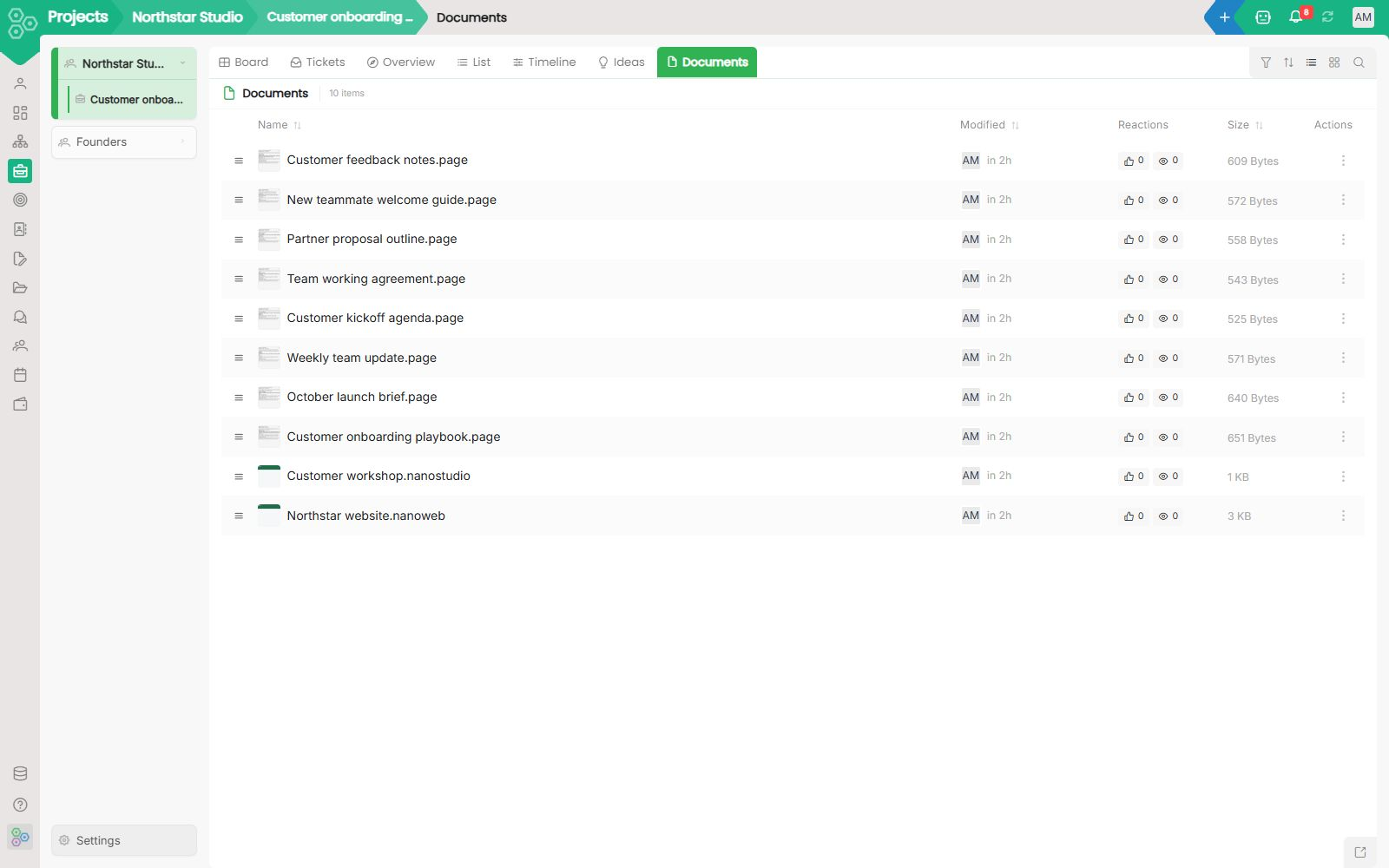
Files: the drives you already have, plus search across all of them
You already pay for cloud storage. The real problem is switching tabs, hunting for files, dealing with version chaos, and re-uploading because other tools can’t access your drive.
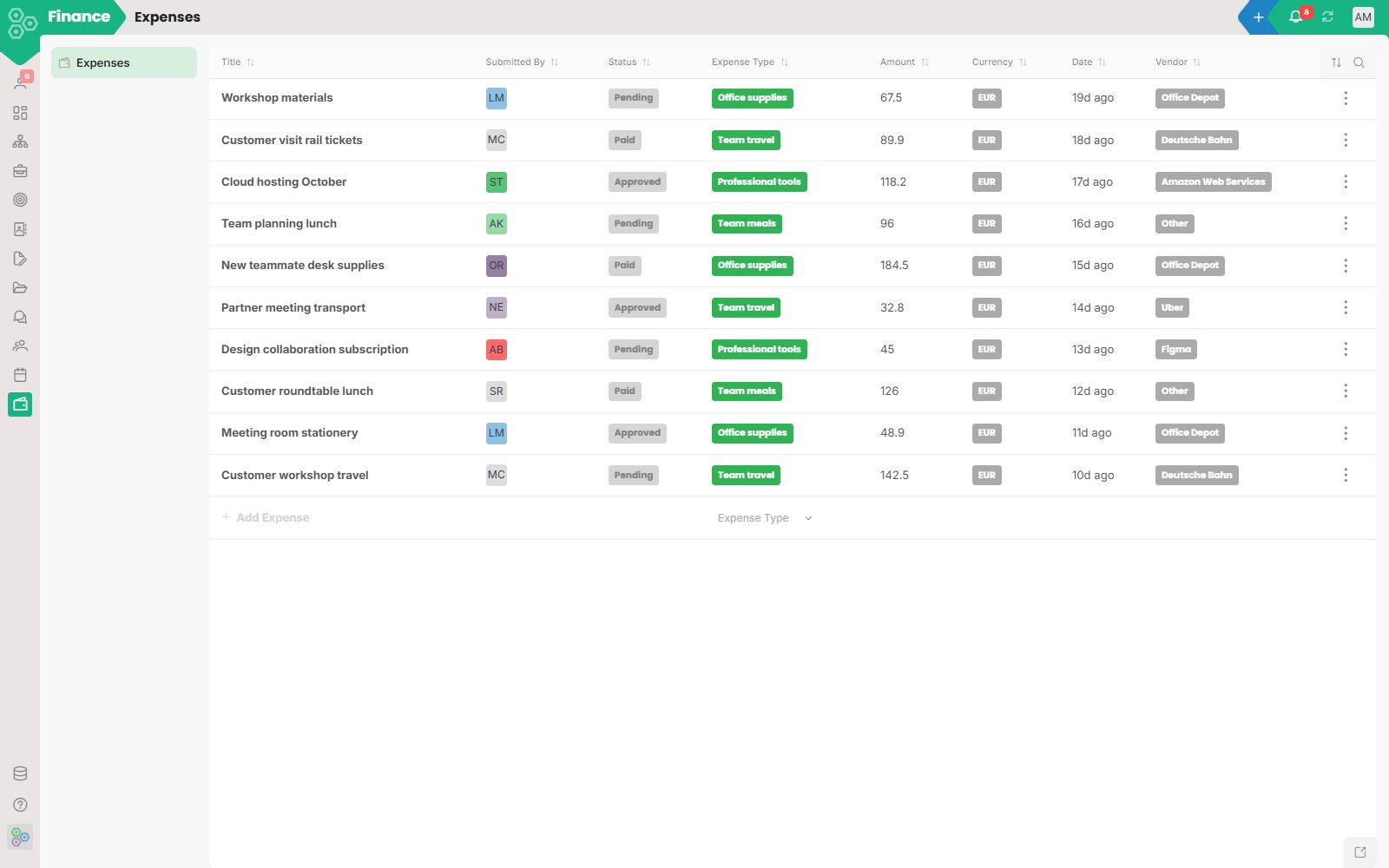
Your finance stack shouldn't require a finance team.
Worknano Expenses is where receipts get logged, invoices go out, and nothing falls through the cracks, without needing a bookkeeper to hold it together. Receipts that read themselves No more chasing the team for receipts at month-end.
Run the whole startup before you can afford a COO.
You're 4 people. You ship something every week. Your stack already costs €600/month and nothing talks to anything. We've been there.
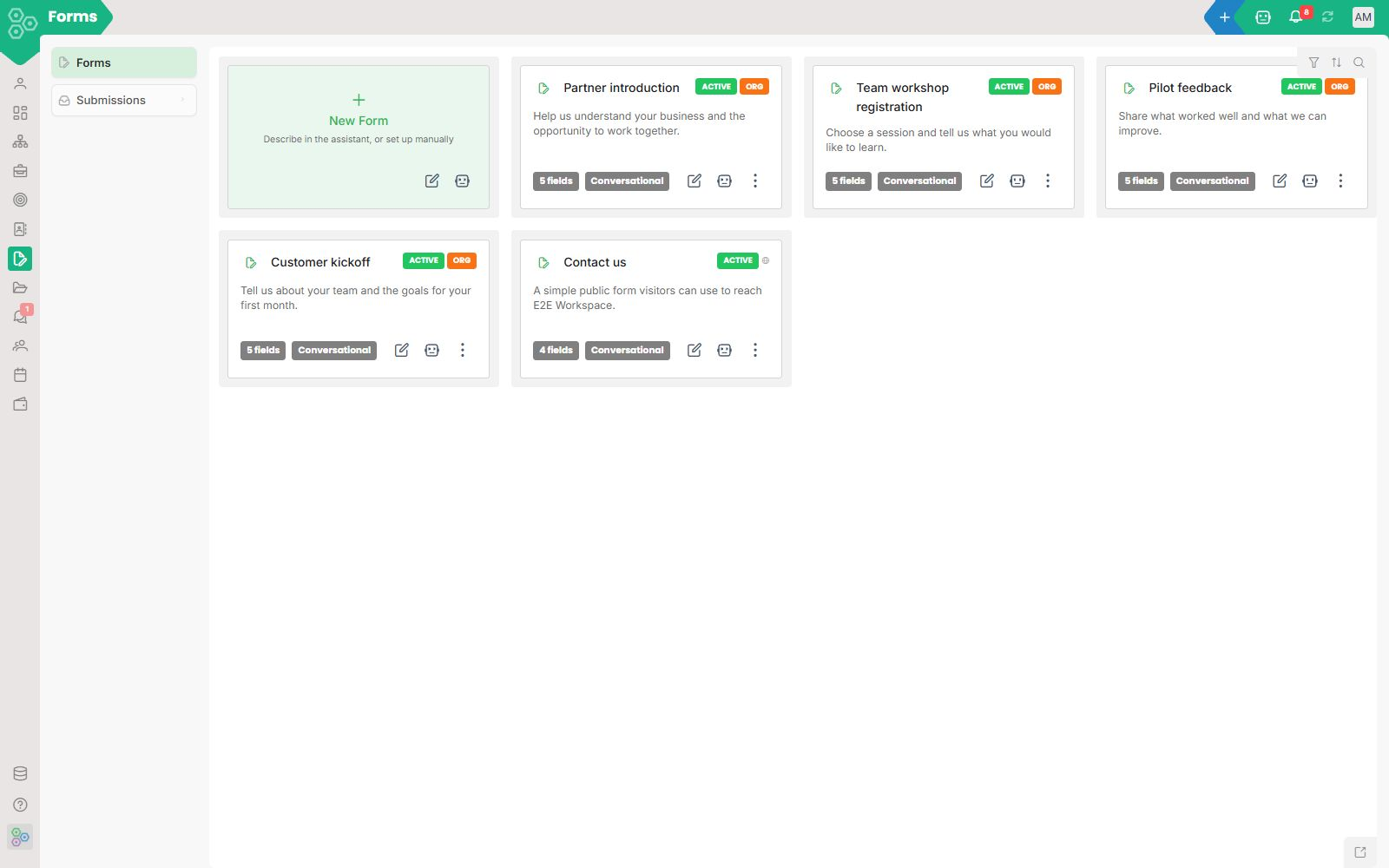
Forms that are also a CRM, also a database, also a workflow
Forms that are also a CRM, also a database, also a workflow Most form tools are just simple inboxes with a pretty interface on top. You build a form, embed it on your website, and then the responses just pile up in a cold list that you have to constantly monitor.
How a French scale-up cut SaaS spend by 60%
"We were juggling 12 different tools, none of which talked to each other.
How is Worknano different from popular SaaS tools and vibe-coded apps?
Popular SaaS tools work in isolation. Each has its own database, its own auth, and no awareness of your other tools, so data silos pile up fast.
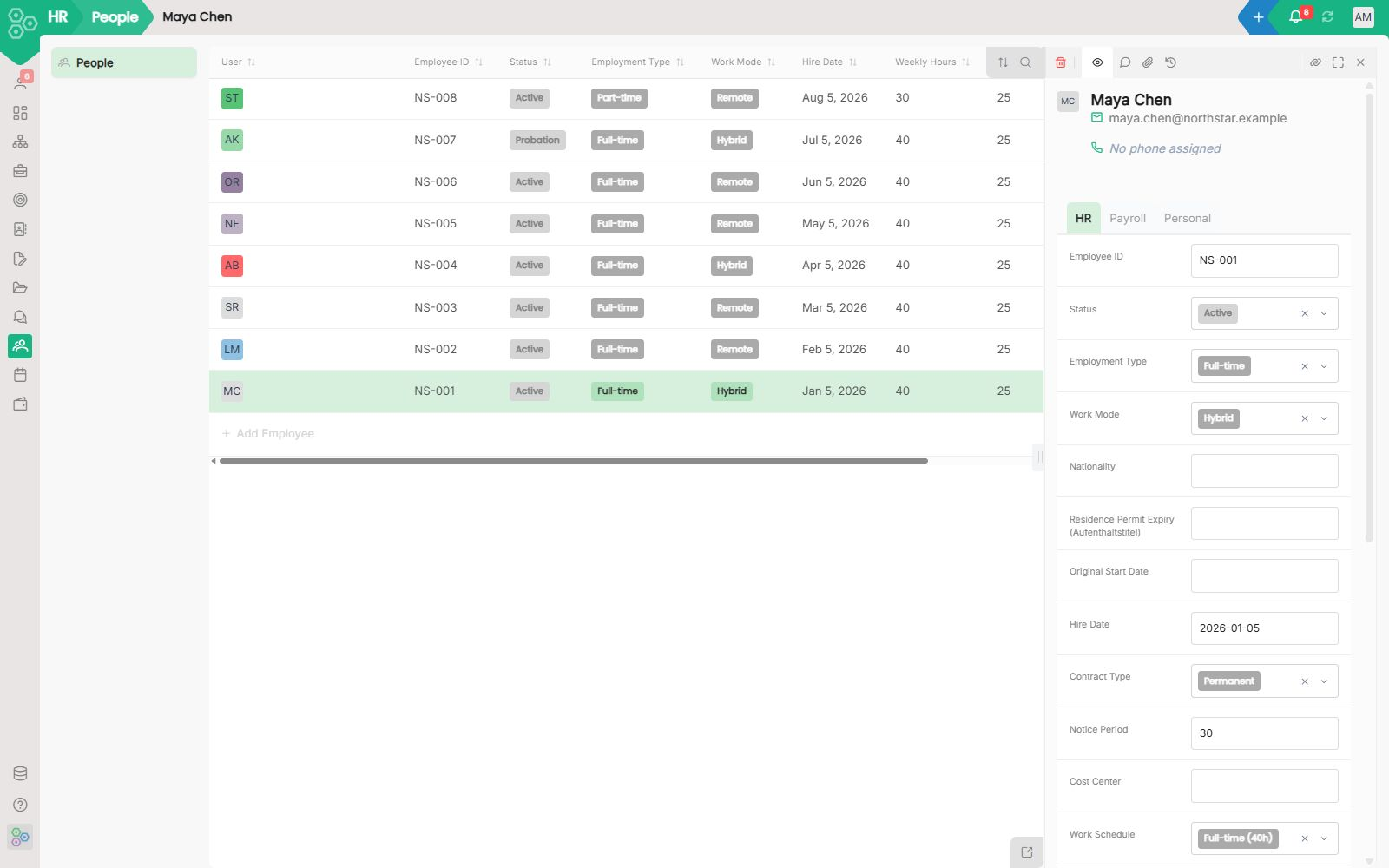
HR for teams that want to ship, not paperwork
HR for teams that want to ship, not paperwork Most HR tools force you into rigid templates and limited fields. Worknano gives you a complete, flexible HR system that adapts to how your company actually works, right from day one.
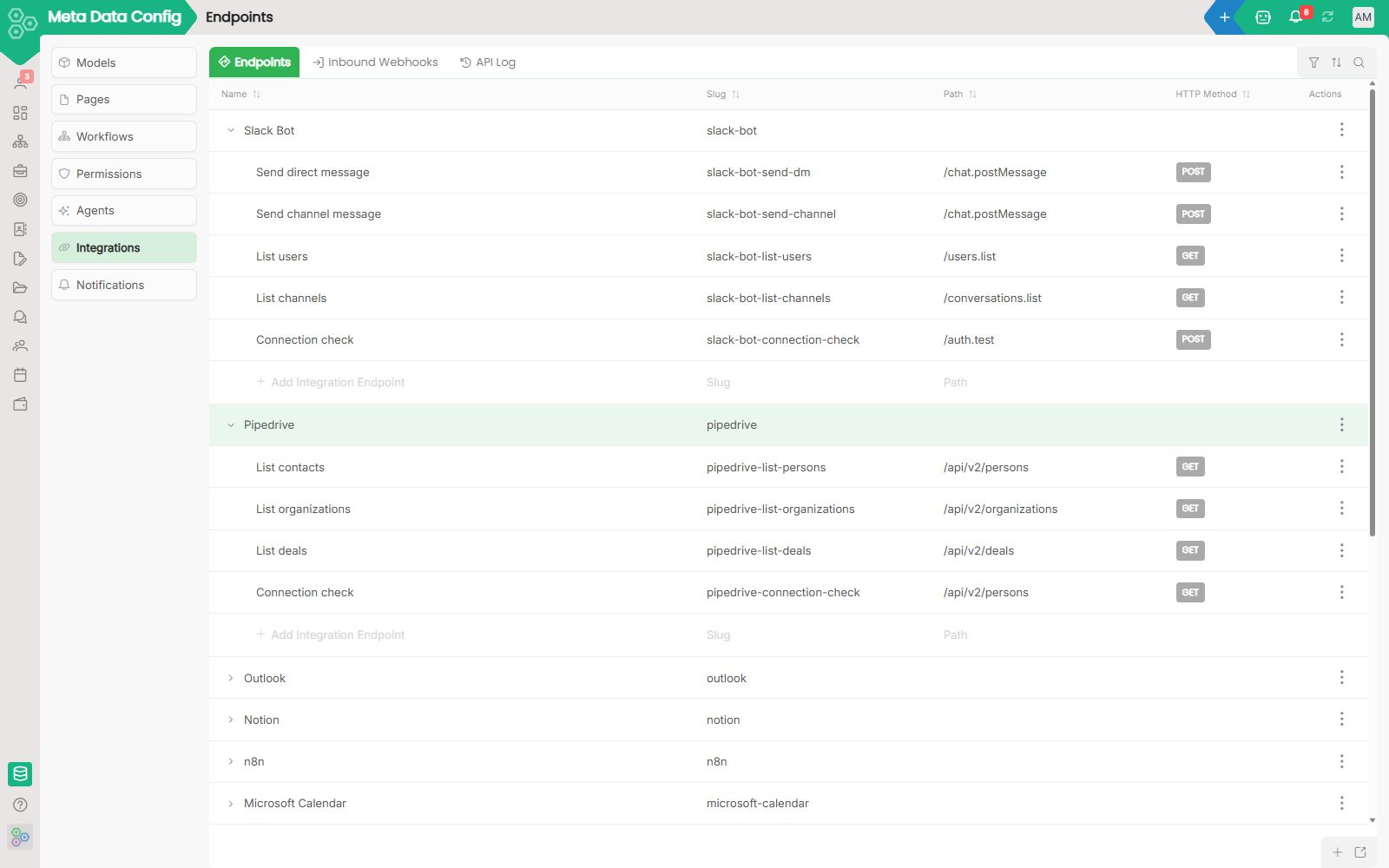
Integrations: connect your stack in clicks, not tickets
Integration is where SaaS dreams go to die. The vendor's marketplace lists your tool, you click connect, you wait three minutes, and either nothing happens or it only works for the one trivial case the demo covered.
Worknano for investors: Business software companies can make their own
Paying customers, more than a year of use with pilot customers, and a multilingual business platform companies can adapt with AI.
Is Worknano GDPR compliant?
Yes. Data is stored in the EU (Frankfurt) by default, each tenant's database is fully isolated, and we sign a Data Processing Agreement on request.
Launch in a weekend: a working business in 48 hours
Most new businesses waste their first month evaluating tools and their second month trying to make them all talk to each other. By month three they finally have a stack but still no customers.
Look legit on day one: a brand-aware workspace before your first sale
Looking professional in your first year used to be exhausting. You needed a designer, a brand book, a website agency, separate invoicing templates, email signature tools, and the discipline to keep everything perfectly in sync.
Manufacturing SME: Gaining Production Visibility
"Excel hell and an expensive, rigid ERP left us blind to bottlenecks.
Marketing Agency: Client Portals That Finally Impress
"Clients used to ping us daily for status updates, and onboarding new hires took two full weeks.
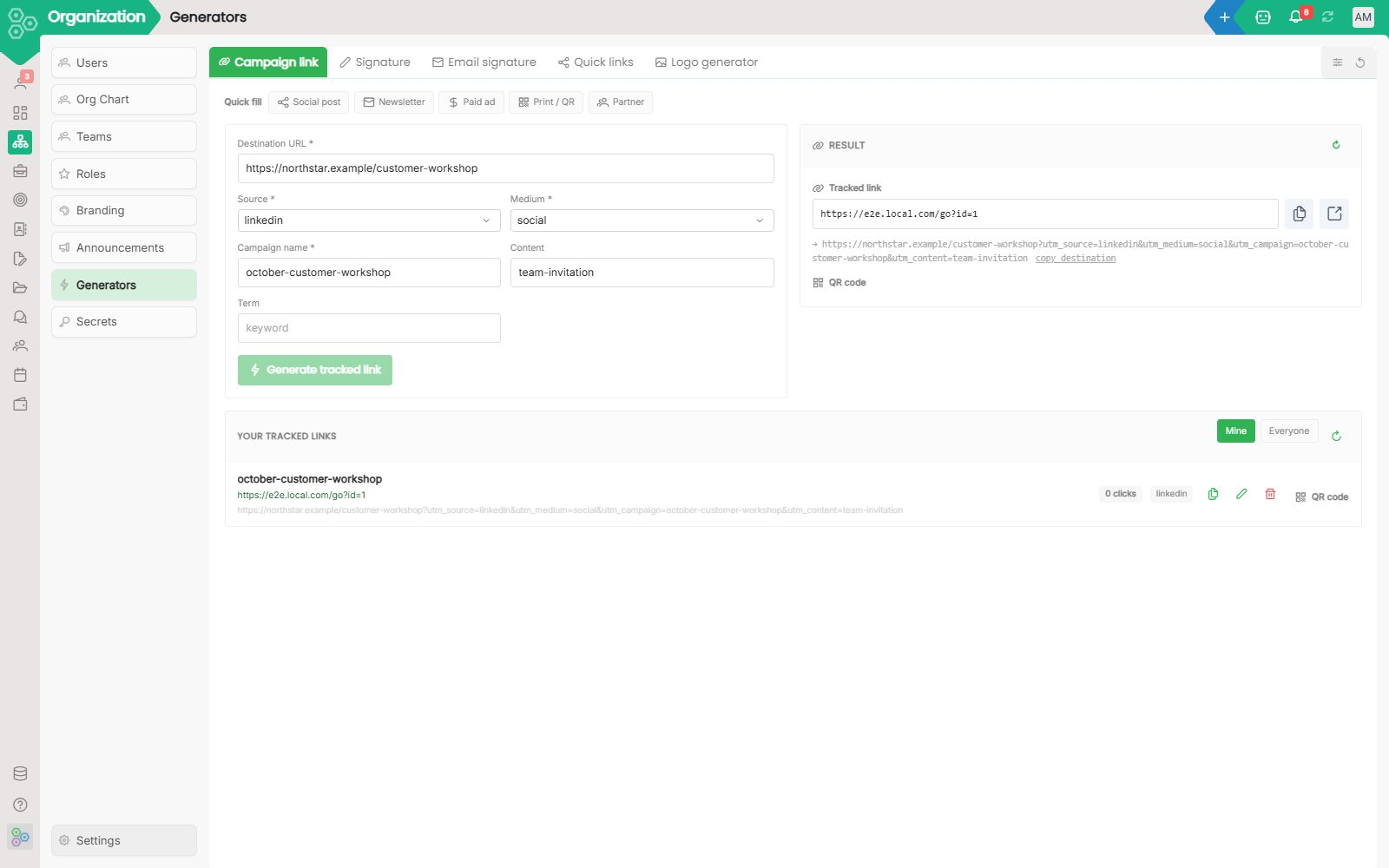
Mini Tools: Small helpers that make everyday work easier.
Some tasks are too small for a full app but too common to keep doing manually. Worknano brings handy mini tools directly where you need them, inside Branding, CRM deals, documents, or anywhere else in your workspace.
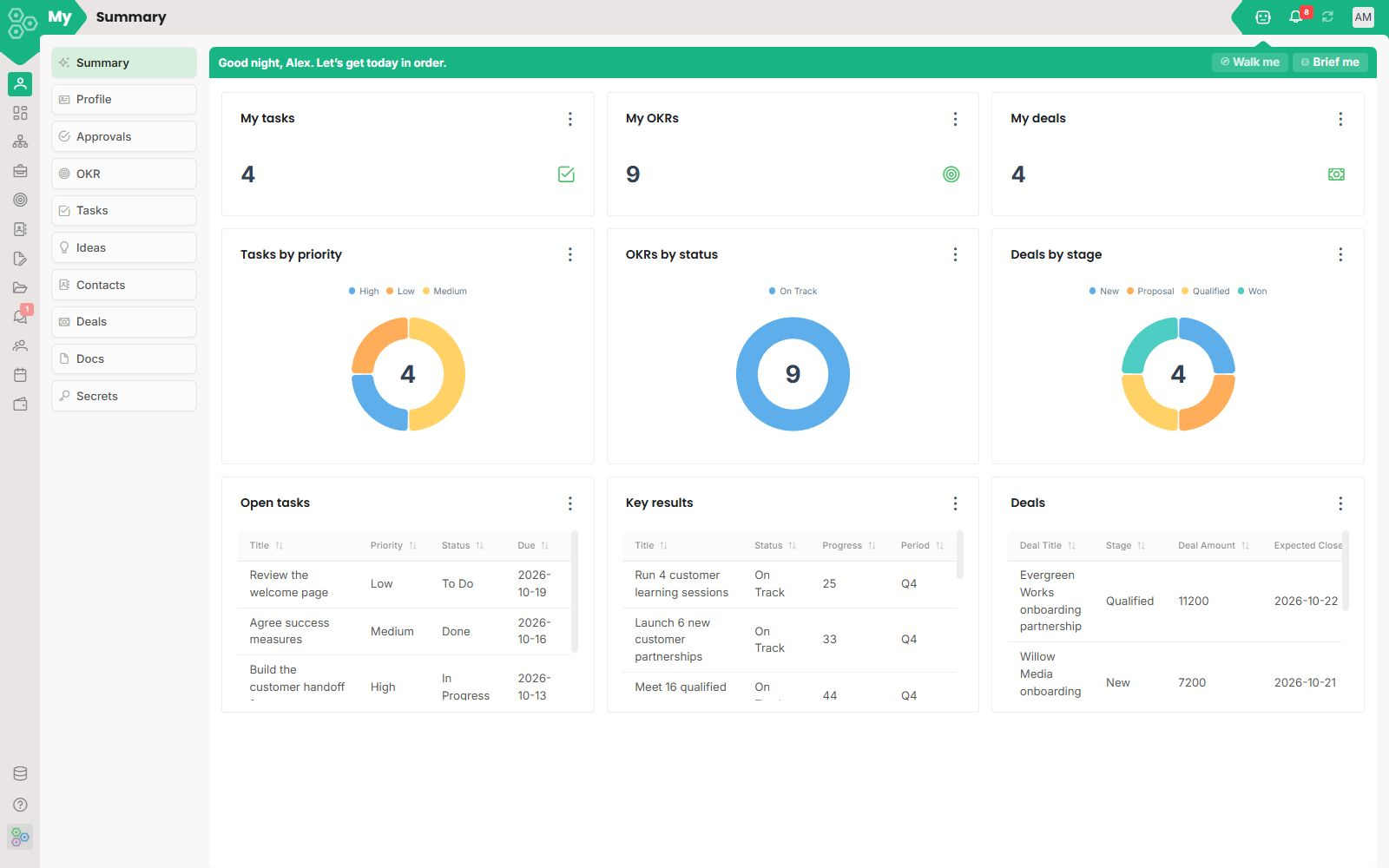
My workspace: today's priorities, surfaced from every module
Every modular SaaS has the same problem: the more modules a user has, the more places they have to check first thing in the morning. Worknano solves it with a personal home called 'My' that aggregates the work waiting for you across every module.
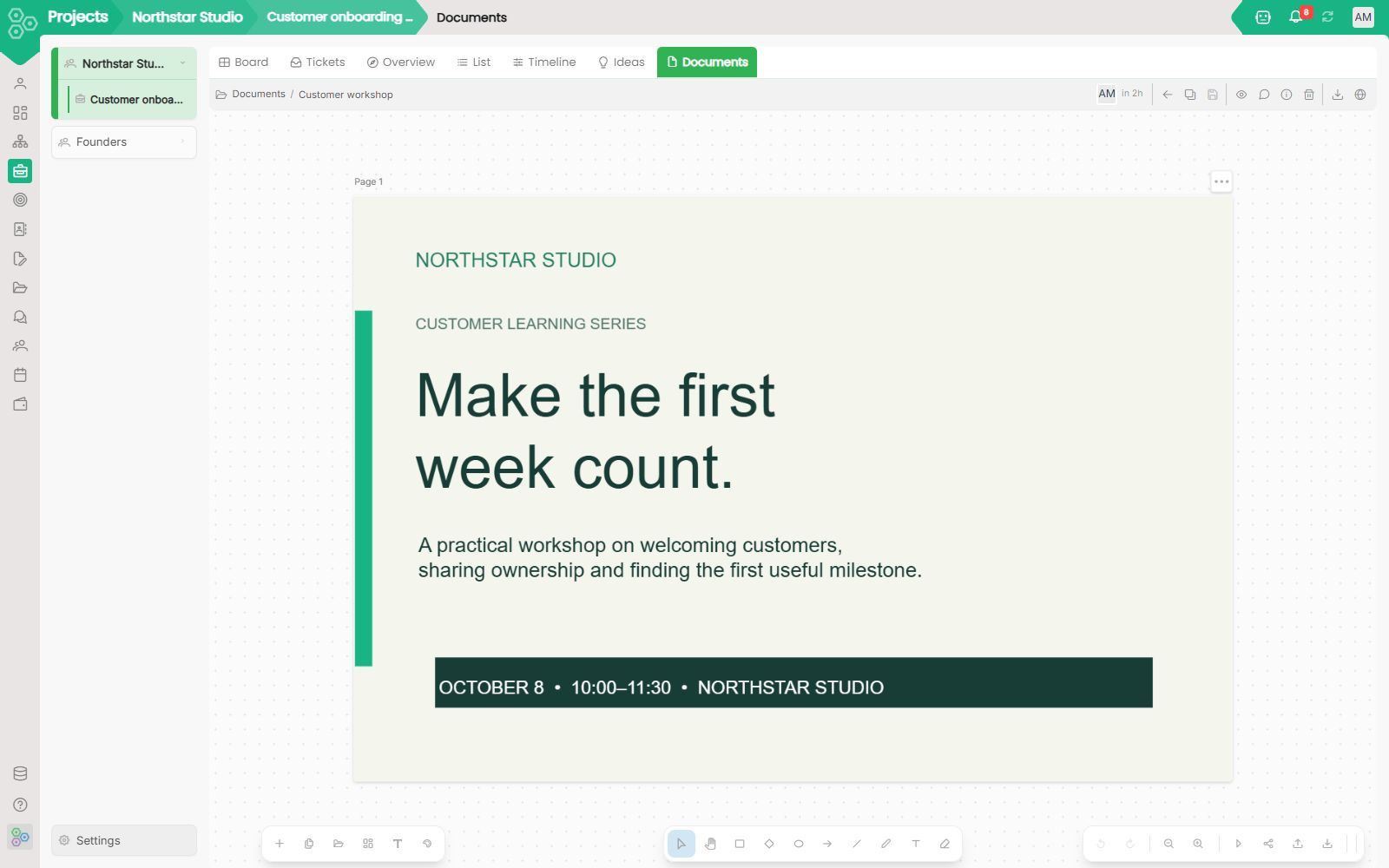
Design: the creative space for teams
The website builder handles your public site. Design handles images, decks, and boards in the same workspace.
NGO: Donor Management That Builds Lasting Trust
"Our funding data was scattered across inboxes and spreadsheets, which created a high audit risk and endless administrative work.", Dr.
OKRs without the religion: a calmer way to run quarterly goals
Most teams that adopt OKRs end up with a beautifully formatted spreadsheet, a quarterly off-site to write it, and a Friday afternoon four weeks later when nobody has touched it. The framework is not the problem; the religion is.
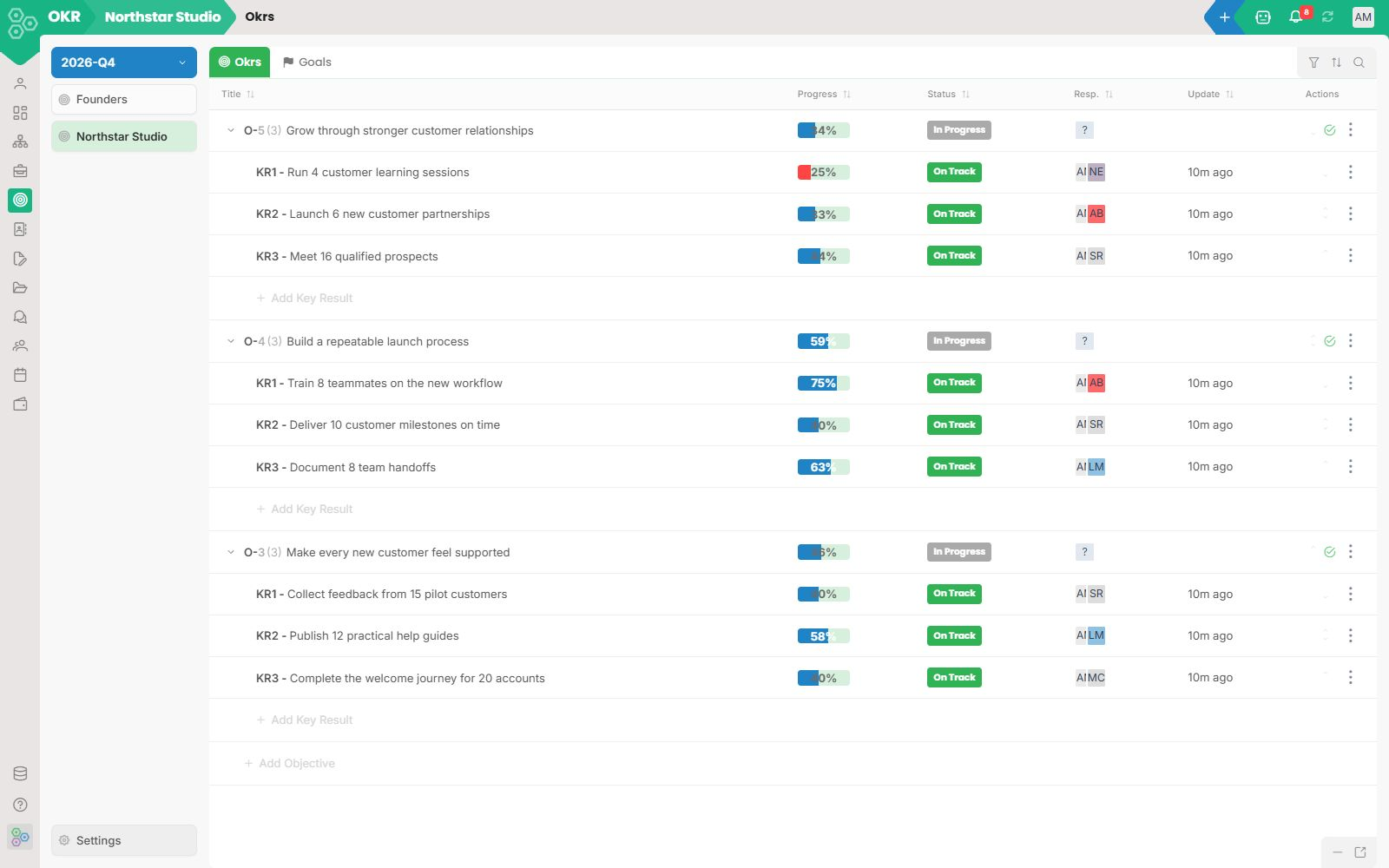
OKRs: Connected to real work, not hidden in spreadsheets
Most OKR tools fail because they are disconnected from the work. The team types the objective in January, types the progress in March, and never types again.
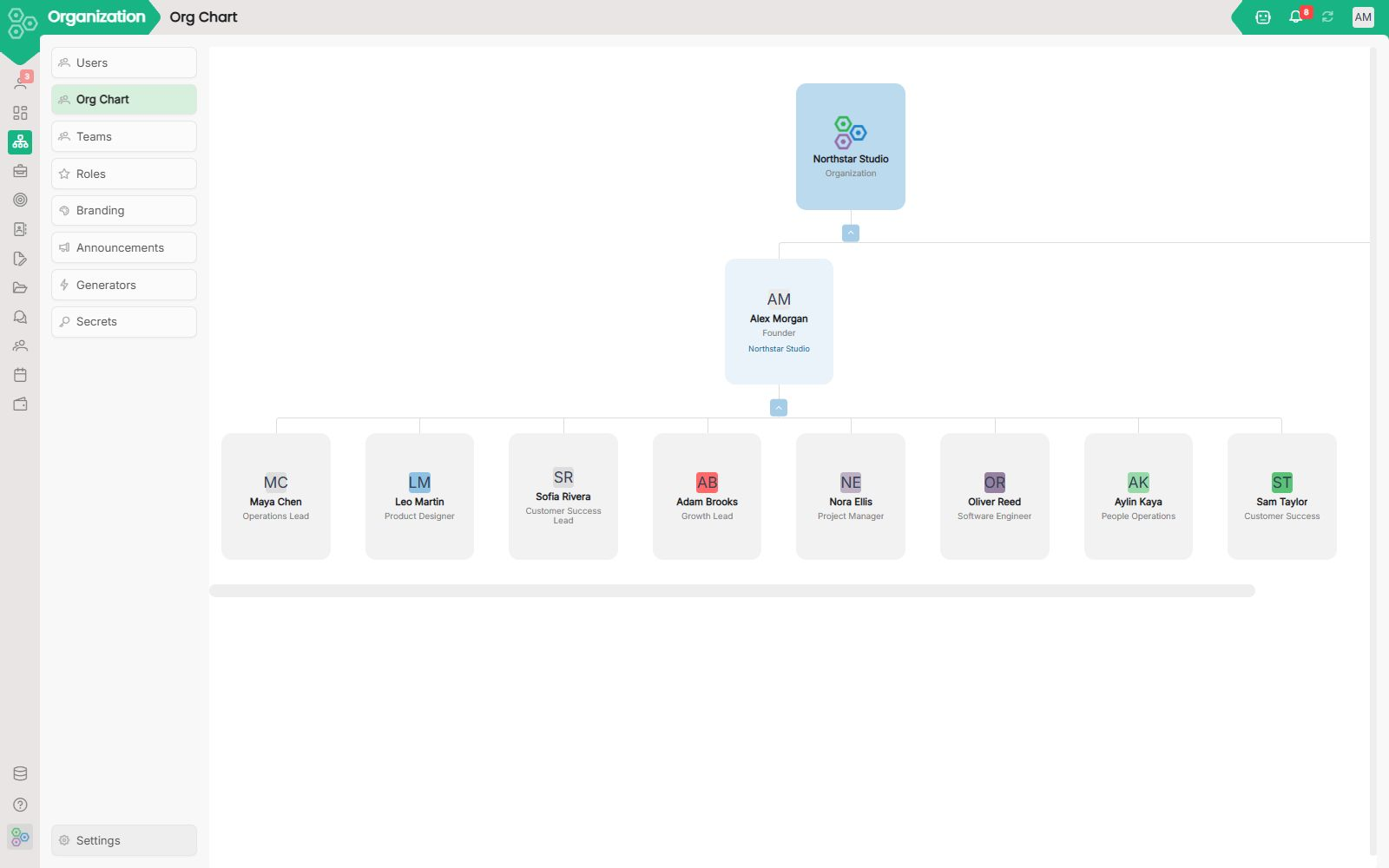
Organization: divisions, teams, users, all in one map
Most SaaS forces you to redefine your organisation in every product: who is on which team, who reports to whom, what each role can see. Worknano centralises the org structure so every other module derives permissions, approvals and reporting from one source.
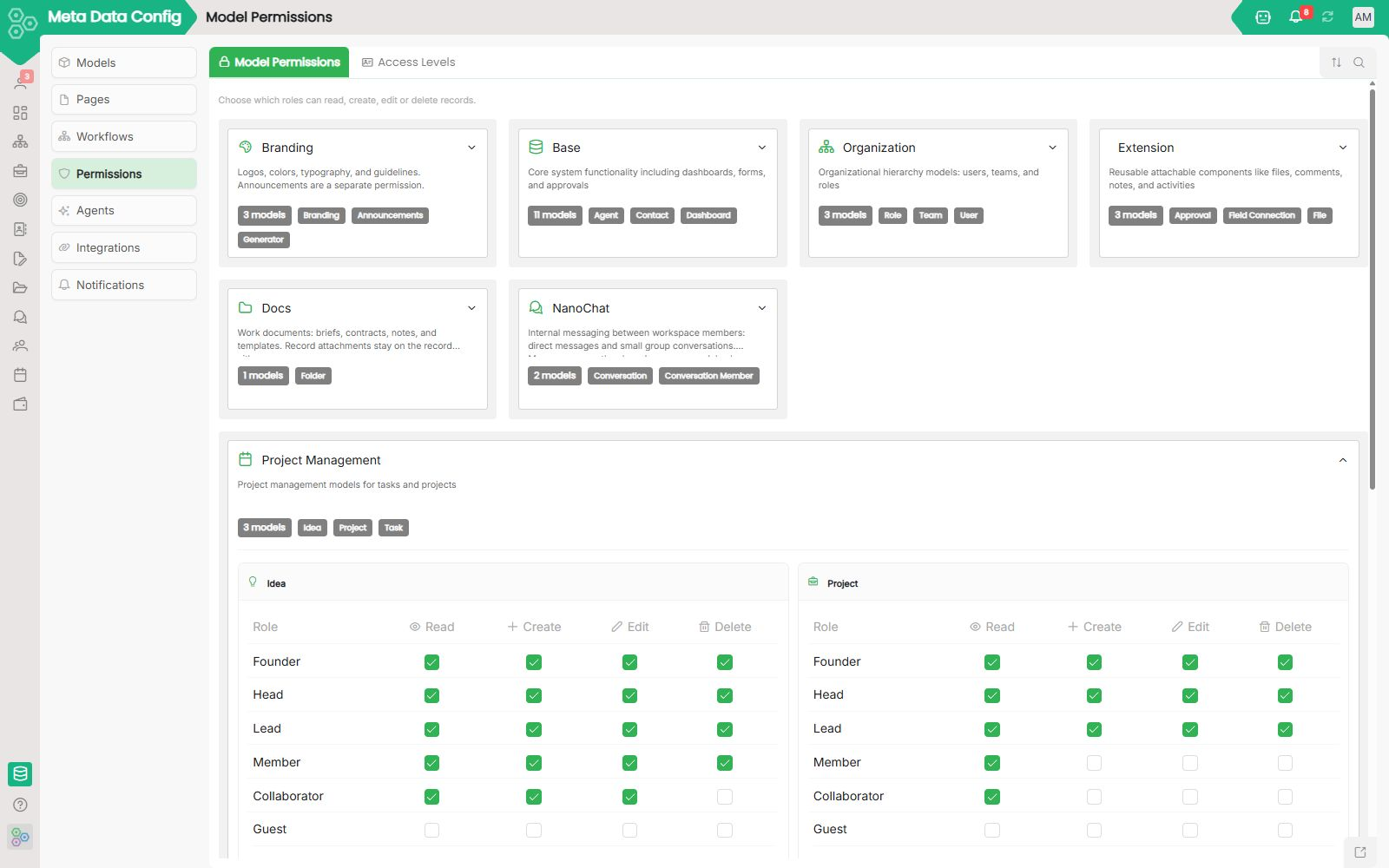
Permissions: roles, access, and who can see what
Permissions: Roles, access, and who can see what Most teams manage permissions separately in every tool, one matrix in the CRM, another in finance, a third in file sharing. Worknano centralizes access control in one place.
Process Mining: See how work actually flows in your workspace.
Every team has a written process and a real process. The written one lives in a slide deck.
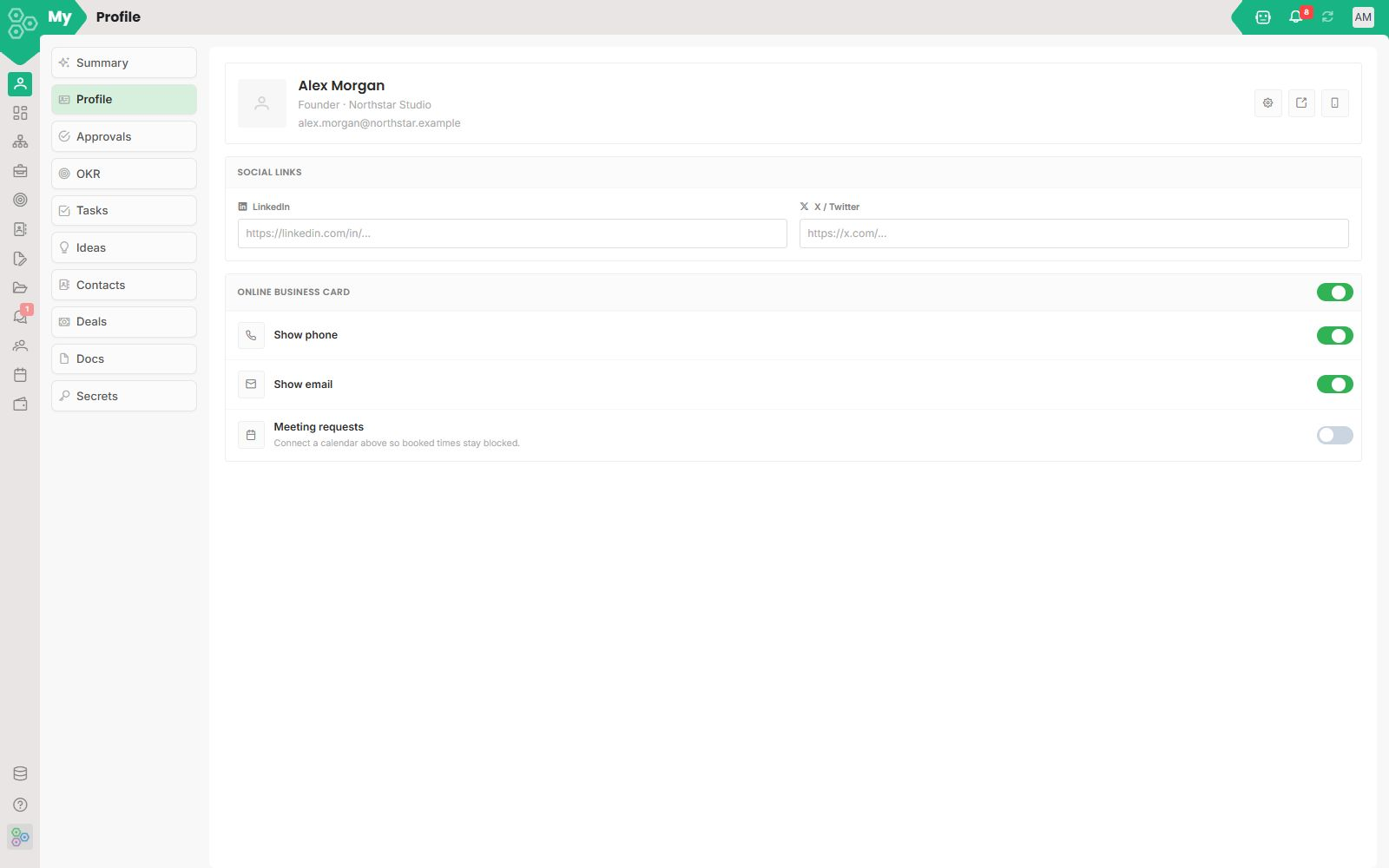
Profile: a public page, a digital business card, a booking link, all in one
A profile used to be a row in a directory. In Worknano, your profile is a public page you can hand out at a conference, install on a phone like a native app, and use as the booking link your customers schedule against.
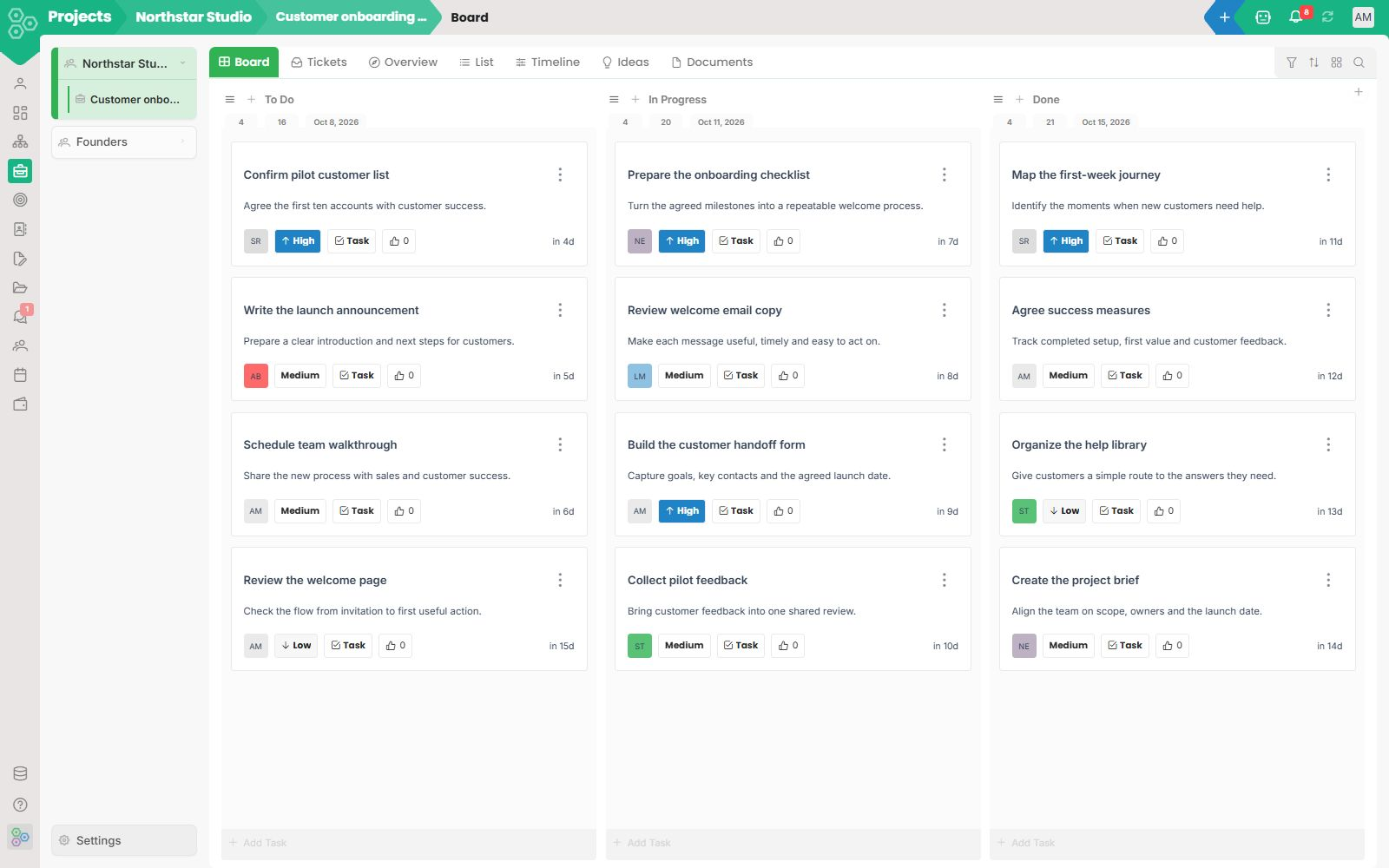
Projects that ship, not project tools that demo well
There is a category of project tool that looks beautiful in a screenshot and turns into a graveyard by week six. The reason is always the same: the team has to type the plan into the tool, then type the plan into a status doc, then type it again into the weekly review.
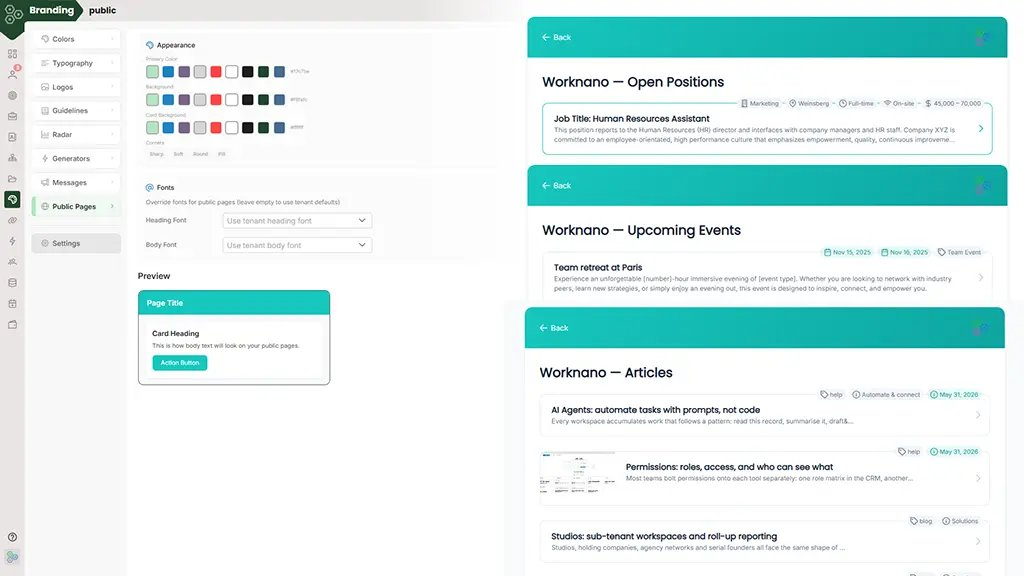
Public Pages let you safely share your data with the world.
Public Pages let you safely share your data with the world. Want to publish open job positions, upcoming events, blog articles, a knowledge base, team profiles or even selected CRM records?
Ditch the bloated stack. Cancel the extras, keep one powerful workspace.
Open your company credit card statement and count the SaaS charges. Most small teams we work with are juggling tons of different tools.
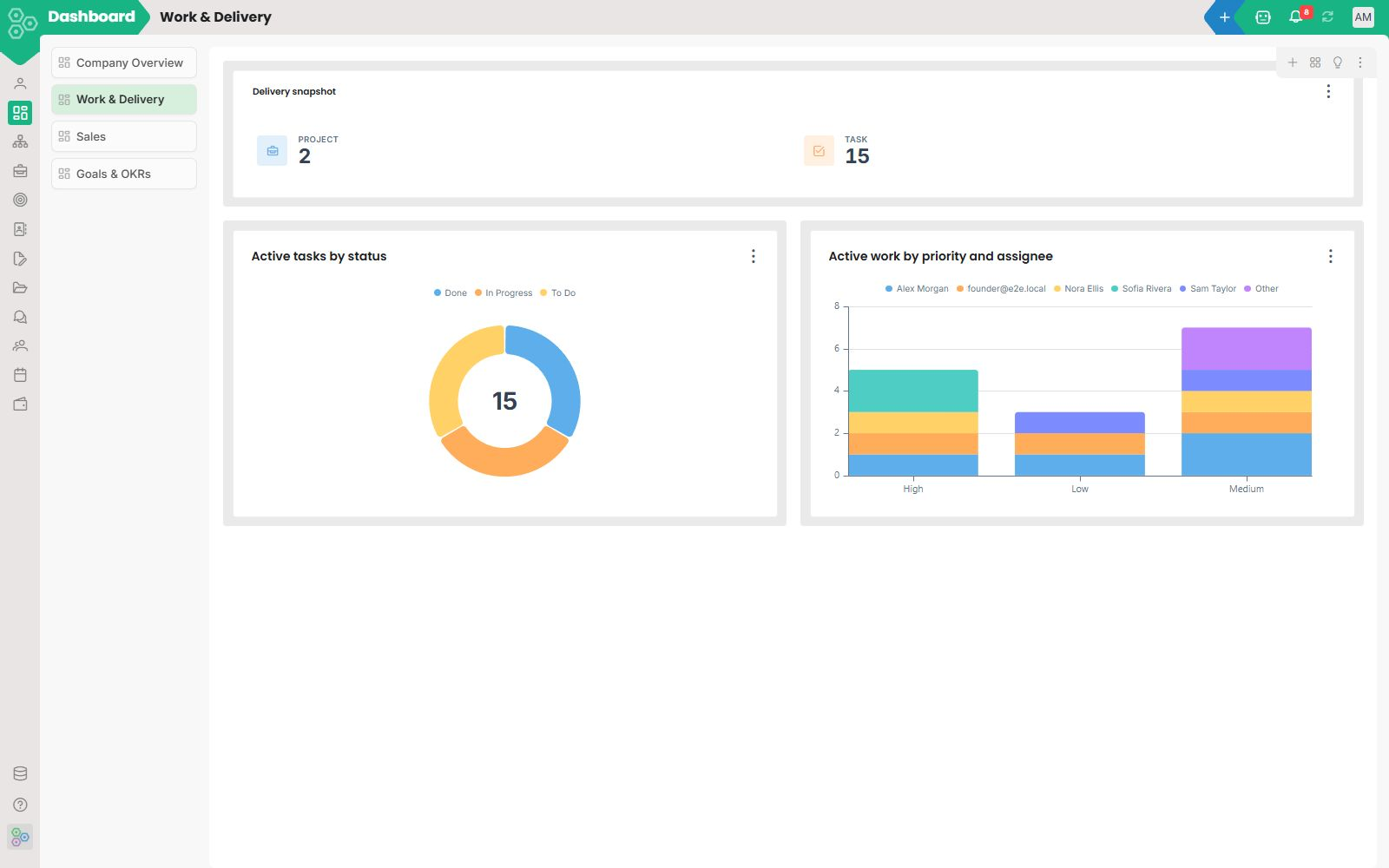
Reporting that answers the questions your teams actually ask
Worknano reporting is not a fixed set of charts, it is a workspace-native analytics layer you configure once and reuse everywhere. In the report designer, you choose the exact fields, filters, groupings and visualizations you want, then save that view as a dashboard, a report, or a shared insight.
Roadmap: what's shipping next, in plain English
October 2026 Files, chat, agents, and MCP Files, workspace chat, an MCP bridge, and stronger AI agents added. UI/UX rework applied across navigation, lists, and settings.
Scale without rewiring: add modules as you grow, never re-platform
Scaling a small business or startup is hard enough. The last thing you need is another painful migration when you outgrow a tool.
Secrets: a team password vault that stays in your workspace
Shared logins should not live in Slack threads or sticky notes. Worknano Secrets is a team password vault with access requests, role-based visibility, and an audit trail.
How a Series-A SaaS replaced 8 SaaS tools in one week
"The fragmentation was killing our momentum.
Small business HQ: sales, ops, finance and people, under one roof
Small businesses rarely have a CIO to negotiate with vendors, a procurement team to consolidate licenses, or a technical team to wire everything together. The owner ends up doing it all themselves, usually between sales calls and while putting out daily fires.
Studios: sub-tenant workspaces and roll-up reporting
Parent organizations that run multiple brands or client workspaces need isolated sub-tenants, shared templates, and roll-up reporting without manual consolidation.
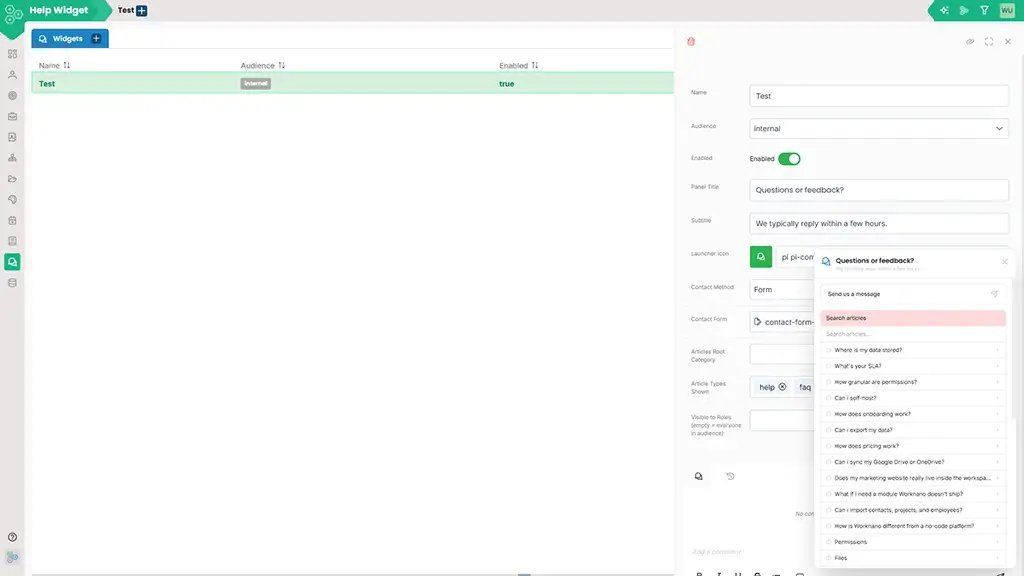
Your help center, blog and FAQ: same module, same workflow
Most companies end up with a help center on one platform, a blog on another, a knowledge base on a third, and a product-tours tool on a fourth. Each has its own login, editor, search index and analytics.
Templates: clone a working playbook instead of starting from scratch
Starting from a blank workspace is fine if you have weeks to spare. Most teams do not.
Worknano vs. Asana: Why Structured Databases Beat Disconnected Task Lists
Worknano vs. Asana: Why Structured Databases Beat Disconnected Task Lists If you are looking for a simple place to type out a basic task list, draw a generic kanban board, and assign a due date to a teammate, Asana is great.
Worknano vs. HubSpot: Stop Paying the "Contact Tax" for Features You Don't Use
If you are a heavily funded B2B enterprise with a massive marketing department dedicated to complex multi-path lead attribution, HubSpot is an exceptionally polished ecosystem. It has spent years building a reputation as the friendly, low-code alternative to legacy corporate CRMs.
Worknano vs. Jira: Reclaim High-Speed Execution Without the Enterprise Bloat
For over a decade, Jira has been the default command center for traditional software engineering. If you are managing thousands of legacy code deployments and have a dedicated team of full-time Atlassian administrators to maintain your instances, Jira’s heavy, rigid framework serves its purpose.
Worknano vs. Monday.com: Stop Paying the "Integration Tax" for Lagging Boards
Monday.com is famous for its vibrant color palettes and visual flair. If your goal is to build a basic dashboard to manually track a handful of isolated team tasks, it is a highly capable tool.
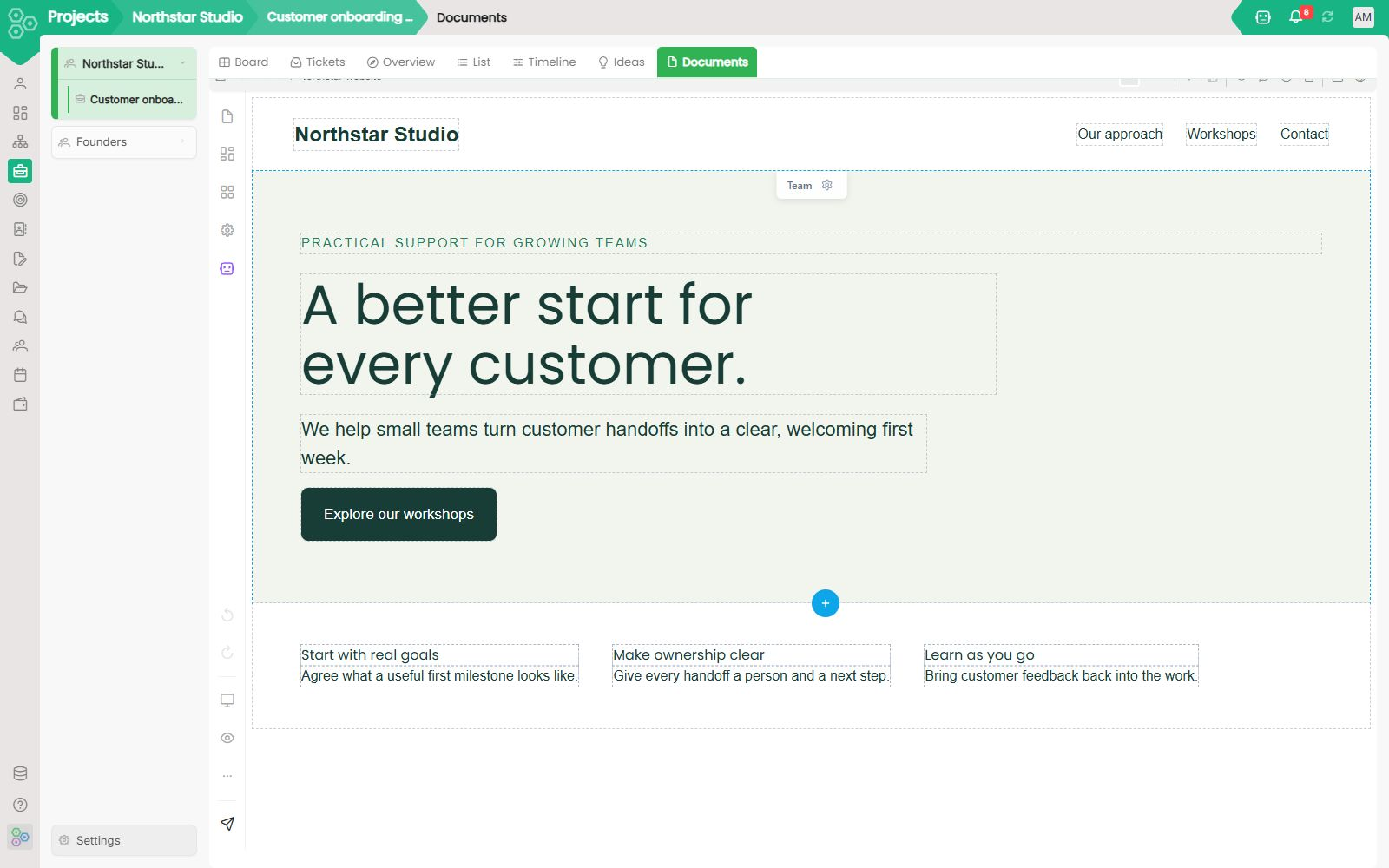
Website Builder: Ship a real marketing site from your workspace
If your marketing site, your help center, your blog, and your gated portal each live on a different platform, you pay four bills, manage four logins, and copy your brand kit into four places that drift.
What happens to our data if we cancel?
Your data belongs entirely to you. Every list view exports to Excel, CSV, or PDF.
What if I need a module Worknano doesn't ship?
Describe it in plain English. The AI Module Builder generates the data model, input form, workflow, and report inside the same auth and database.

What is Worknano? A different approach to business software
Connected tools for your everyday work. Use AI to adapt them to your business, while we take care of the platform underneath.
Where is our data stored, and is it secure?
EU (Frankfurt) by default; US East and APAC are available on Enterprise. All data is encrypted at rest (AES-256) and in transit (TLS 1.3). Each tenant's database is fully isolated, your data never mixes with another company's.
Which AI model does the AI Module Builder use?
Flexible LLM configuration. You can connect any model you choose, including local deployments, open-source models, or your company's own private endpoint. You're never locked into a single provider.
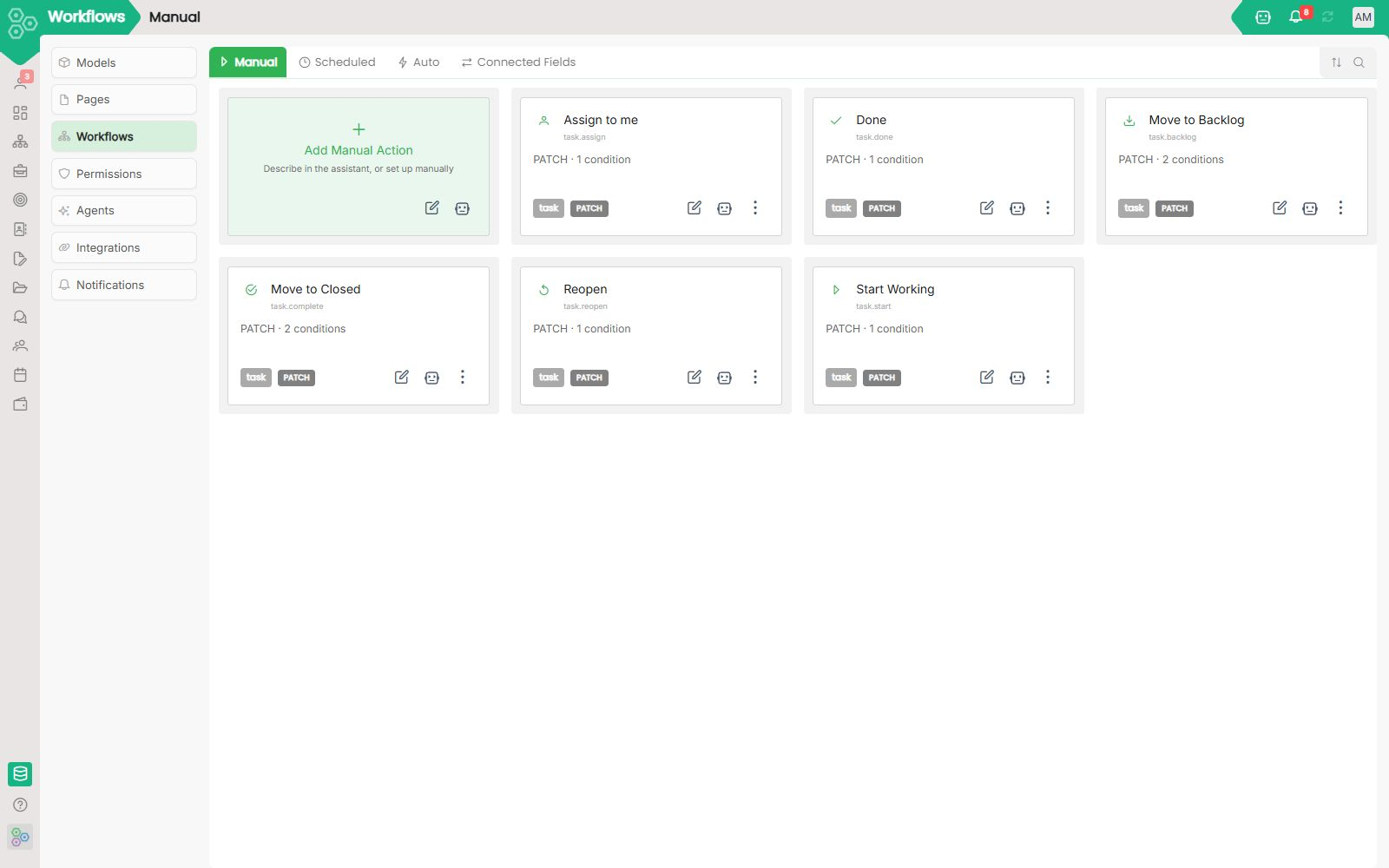
Workflows are how Worknano automates work between modules.
Workflows are how Worknano automates work between modules. Instead of building automation in a separate app and then trying to glue it back to your CRM, projects, or invoices, Worknano puts automation inside the same workspace, the same data model, and the same visual builder you already use.
Worknano vs. Airtable: Stop Managing "Bases" and Start Running Your Business
Airtable is often the "gateway drug" for teams moving away from spreadsheets. It’s colorful, intuitive, and great for prototyping.
Worknano vs. Bolt.new: Build Scalable Corporate Infrastructure, Not Single-Browser Spaghetti Code
Bolt.new (by StackBlitz) introduced a remarkable technical achievement: a full-stack development workspace that runs an entire Node.js development server, terminal, and live preview container directly inside a single browser tab.
Worknano vs. Calendly: Build a Smart Team Presence, Not a Matrix of Messy Links
Calendly is the undisputed pioneer of eliminating the agonizing "what time works for you?" back-and-forth email chain. If you are a solo consultant who just needs a static webpage to let people book a 30-minute chat, it is a perfectly capable tool.
Worknano vs. Canva: Reclaim Unified Team Layout Design Without the Premium Pricing Spikes
Canva completely democratized digital asset creation by replacing complex graphic suites with an intuitive, drag-and-drop template interface. If you are an individual creator spinning up high-level social media banners or editing a single presentation deck, it is a highly accessible web tool.
Worknano vs. Celonis: Enterprise Process Intelligence Without the Multi-Million Dollar Project
Celonis is the absolute titan of the enterprise process mining market.
Worknano vs. Lovable: Two different approaches to business software with AI
Lovable helps you build an application with AI. Worknano gives you a ready-made business workspace and lets you create additional modules through configuration. Here is what that difference means for your team.
Worknano vs. Miro: Turn Your Whiteboards Into Real Database Engines
Miro pioneered the art of the infinite digital whiteboard. If your goal is to hold an ad-hoc sticky note brainstorming session, sketch out an unstructured mind map, or host a casual remote team workshop, it is a highly responsive visual workspace.
Worknano vs. n8n: Native Data Environments vs. Fragile Pipeline Construction
n8n has established itself as an elite, developer-centric powerhouse for building intricate, node-based workflow graphs. If you are an automation engineer who loves writing custom JavaScript transforms, connecting obscure rest endpoints, and managing server infrastructure, it is a brilliantly designed tool.
Worknano vs. Notion: Stop Building Your Own Software and Start Running Your Business
Notion is a beautiful canvas. It is the ultimate tool for individuals who want to build a "second brain" or a pretty wiki.
Worknano vs. Personio: Scale Fast Across Borders Without the Legacy Rigidity
Personio has carved out a massive reputation as the default all-in-one HR platform for European small and mid-sized businesses, particularly in Germany.
Worknano vs. Salesforce: Reclaim Simple, Fast Revenue Growth Without the Enterprise Bloat
Salesforce is the undisputed titan of legacy corporate software.
Worknano vs. Typeform: Stop Paying Premium Rent for a Fancy Front Door
Typeform revolutionized data collection with its sleek, one-question-at-a-time conversational interface. If you need a beautifully polished survey to capture high-level consumer feedback, it is a highly capable design tool.
Worknano vs. Webflow: Escape the Class-Naming Grind and Rigid CMS Ceilings
Webflow is an absolute powerhouse for pixel-perfect visual design, giving frontend creators unparalleled control over CSS properties and layout animations directly inside the browser canvas. For design agencies building highly stylized, static corporate portfolios, it is an exceptionally robust interface.
Worknano vs. WordPress: Break Free from Plugin Hell and Constant Security Audits
WordPress is the foundation of the traditional web, currently powering over 40% of the internet. If you are building a straightforward content blog and have an IT squad dedicated to managing manual server stacks, caching frameworks, and weekly security updates, it is a highly understood piece of legacy software.
Worknano vs. Zapier: Stop Paying the "Automation Tax" for Tools That Should Already Be Connected
The modern startup tech stack has a dirty secret: we are all paying a "tax" just to make our software talk to itself. Zapier has become the duct tape of the internet, and we have normalized paying monthly subscriptions to manage our other subscriptions.